Cast your mind back to 2015, when Tsio Hai was still a co-learning center. A group of passionate parents formed a campus site preparation committee, spending their weekends scouring every corner of Hsinchu County in search of a future home for the school. At the time, Xinpu was never on anyone’s shortlist. In committee meetings, everyone’s impression of Xinpu was: “There are many factories nearby, and they occasionally emit strange odors that might harm our children’s health.”
Site inspection after site inspection, a strange pattern began to emerge: every potential campus location we considered fell through due to unforeseen circumstances. After repeated setbacks, hope was waning as everyone wondered if we would ever find a suitable home for our school.
Then, out of the blue, news arrived of a promising plot of land waiting on Sansheng Road in Xinpu. The moment members of the campus preparation committee set foot on the site, there was a shared, unspoken certainty: this was where Tsio Hai was meant to be.
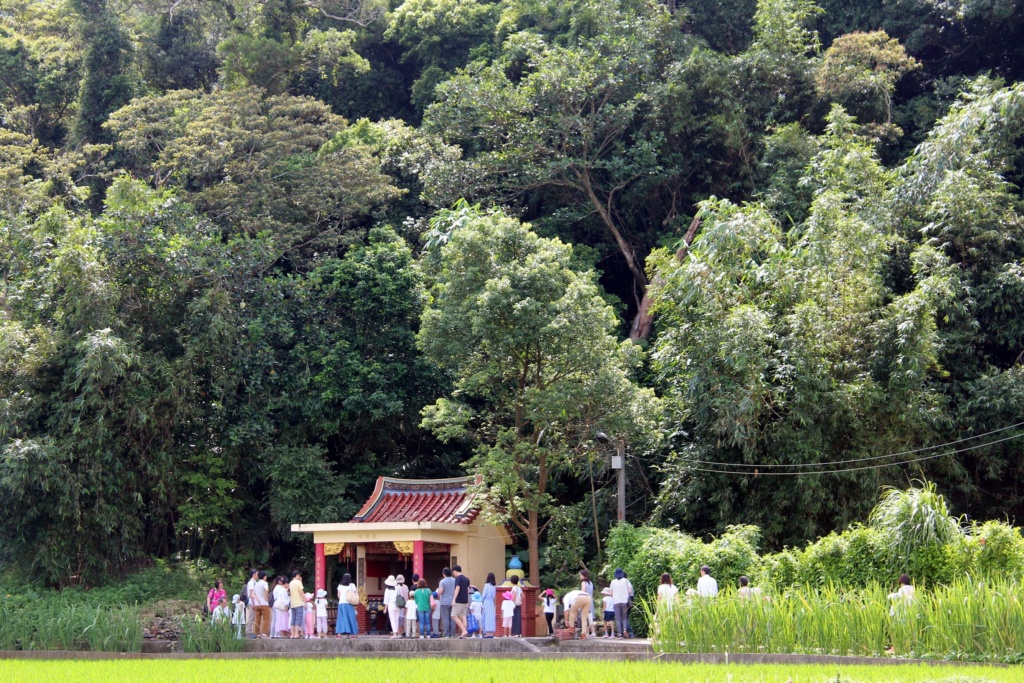
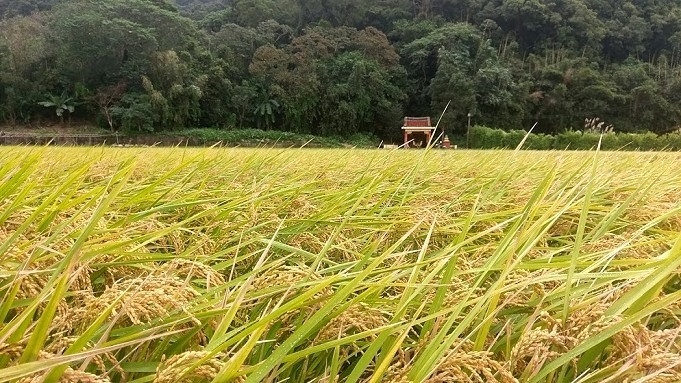
Initially, our aim was simply to lay roots and establish a home for our school. Yet, once we officially moved to this site—embraced by hills and streams, surrounded by Mount Lianhua, and nestled beside the historic, century-old Sansheng Temple—a deeper realization emerged.
Through countless explorations, our children were enchanted by the endless natural springs flowing at the foot of the hill, the winding paths of the Feilong Trail, and the view of the Xiaoli River meandering below. Only then did we truly understand: our campus is held safely in the gentle embrace of Mount Lianhua and the Xiaoli River, a serene and self-contained sanctuary.
The children of Tsio Hai are truly blessed. Here on this land, they roam freely, draw nourished inspiration, and learn with joy.
Just as parents were rejoicing that the school was enveloped by lush green rice paddies—where children could harmonize with nature and connect with all living things among verdant hills and clear waters—they discovered that neighboring farmlands were still using conventional farming methods. Not only did they rely on chemical fertilizers, but they also sprayed pesticides regularly. “How can we create an environment where our children can grow up undisturbed by pesticides, coexisting in harmony with nature?” This question quickly became a shared riddle that many parents felt called to solve.
Rudolf Steiner, the founder of Waldorf education, observed that the prerequisite for freedom rests on two conditions: “First, one must have the capacity to know the real world; only through genuine cognition can true freedom exist. Second is action—arising from a clear understanding of reality, one performs the most appropriate action. Only when these two conditions are met can true freedom be realized.”
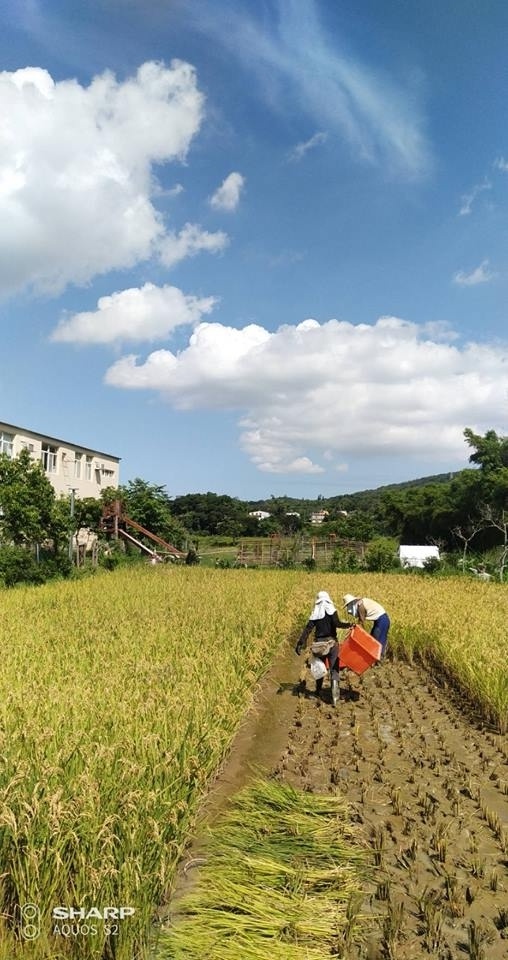
Having recognized the reality that the land surrounding our school was under conventional farming, we took purposeful action: leasing nearly 0.35 hectares (approx. 3,500 sq meters) of neighboring farmland. Here, our students practice natural farming during their agricultural classes, demonstrating to local farmers that cultivating the land without pesticides or chemical fertilizers is entirely possible.
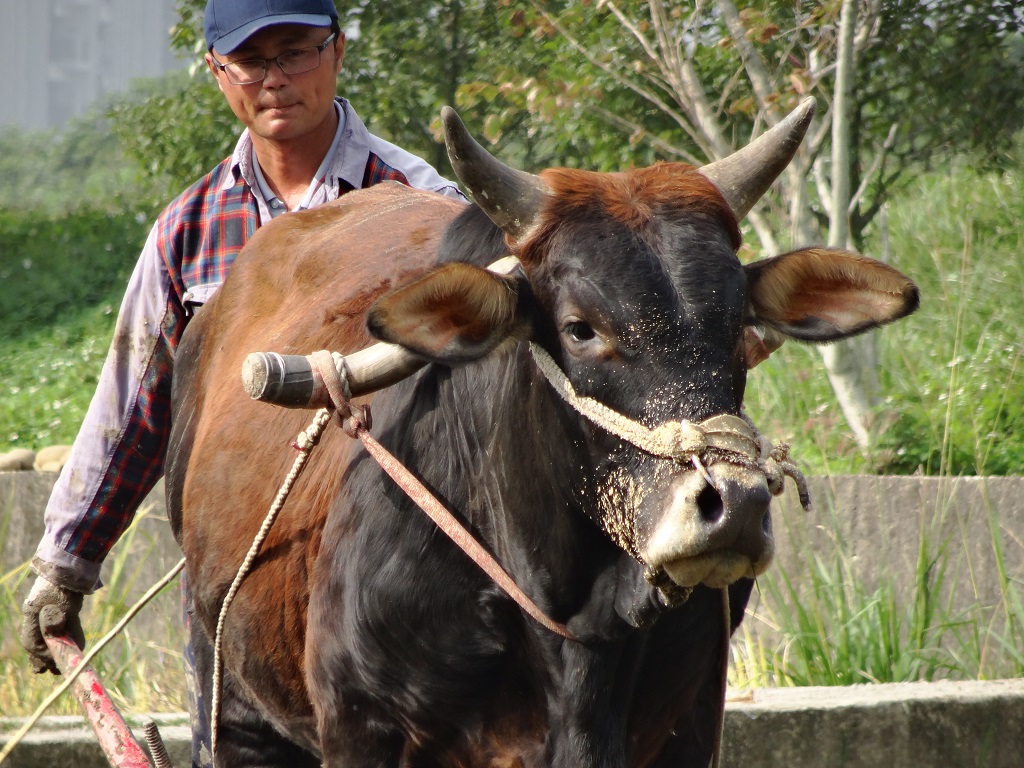
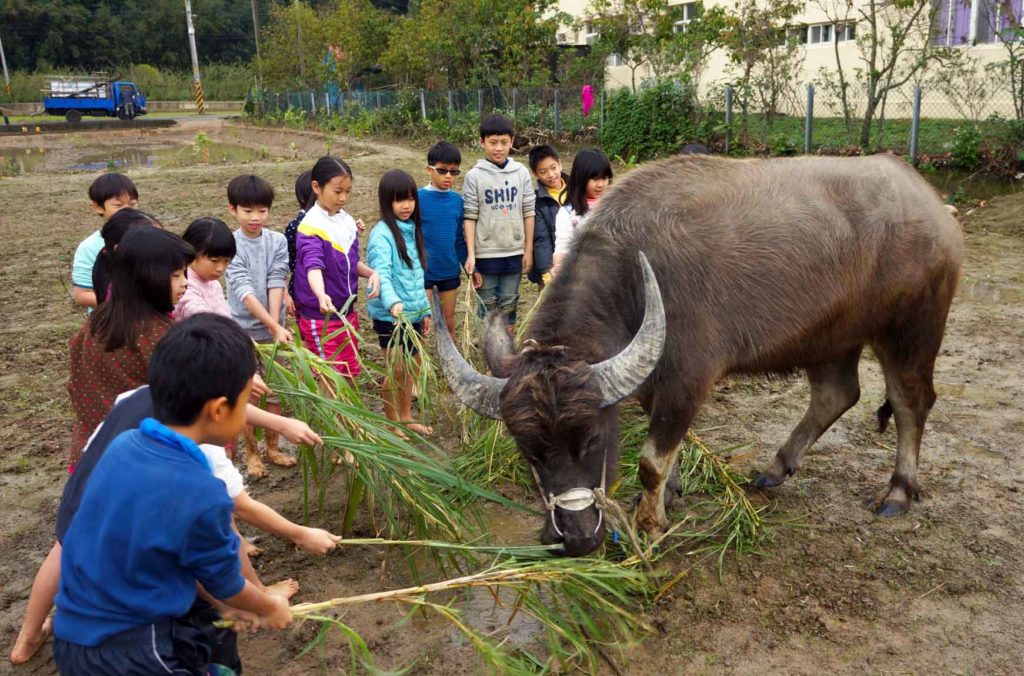
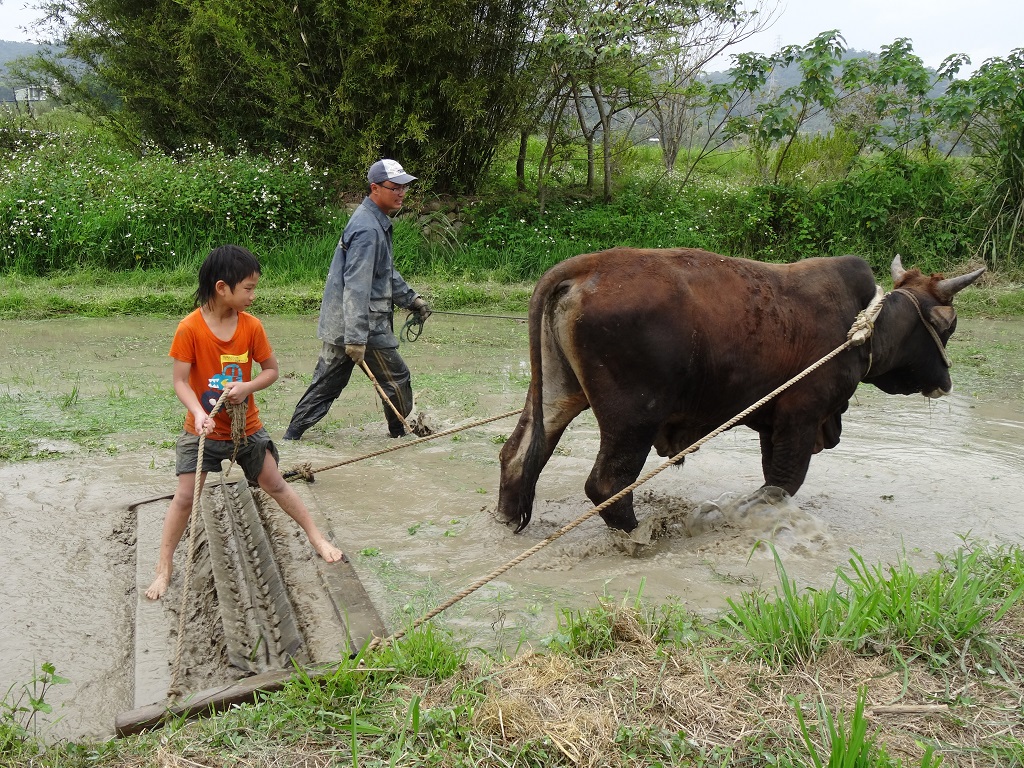
On the Lichun (Beginning of Spring) in 2017, Grade 3 students embarked on their rice-growing journey as part of their agricultural curriculum. Assisted by a water buffalo, the children started from scratch with plowing. As they worked the field, local farmers gathered around in amazement—it had been decades since they had witnessed such traditional farming methods. Today’s farmers must align their schedules with modern machinery, unlike our students, who truly worked in harmony with nature and the changing light of day.
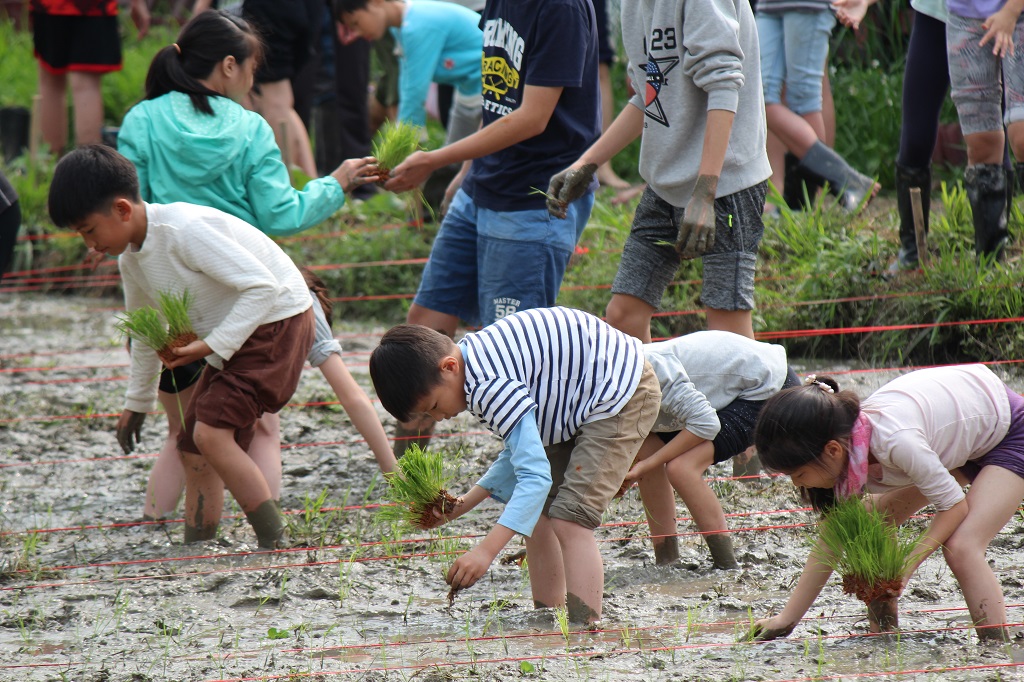
By the Chunfen (Spring Equinox) celebration, the children stepped one by one into the muddy paddy to plant the rice seedlings. Four months later, their labor was rewarded with a bountiful harvest: half a fen of land (approx. 500 sq meters) yielded 350 catties (210 kg) of raw grain, producing 221 catties (132.6 kg) of milled rice.
This abundant harvest stirred the hearts of once-hesitant adults, while the traditional “harvest meal” shared during the reaping deeply united our community. We came to realize that Tsio Hai is far more than just a school. The school was merely a seed—one that, nurtured by the loving care of many, has grown into a vibrant Organic Village: a community dedicated to restoring the Earth through natural farming.
Following the summer harvest of 2017, a group of passionate parents joined hands to pool funds and purchase nearly 2,800 square meters (approx. 0.7 acres) of farmland, donating its use freely to the school—a plot fondly named the “Love Field” (愛心田).
Building on this momentum, dedicated parents Kang-Ming and Shun-Tai subsequently leased adjacent farmlands spanning over one hectare. Embracing both Natural Farming and Biodynamic (BD) principles, they cultivated rice without toxic chemicals. The resulting safe, pesticide-free harvest, named “Kang-Shun Rice” (康順米), not only feeds our students in the Tsio Hai kitchen but is also shared with friends throughout our community.
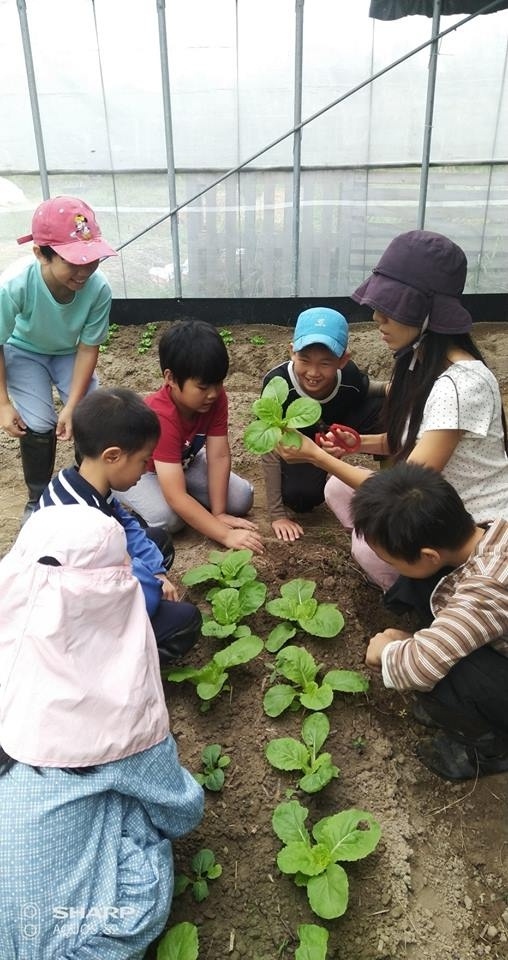
Beyond the paddy fields, the school’s leased land has expanded to include vegetable patches and herb gardens. Parents are warmly invited to take part in planting, helping Tsio Hai Farm gradually evolve from an experimental plot into a flourishing production farm.
(Click here to learn more about Kang-Shun Rice)
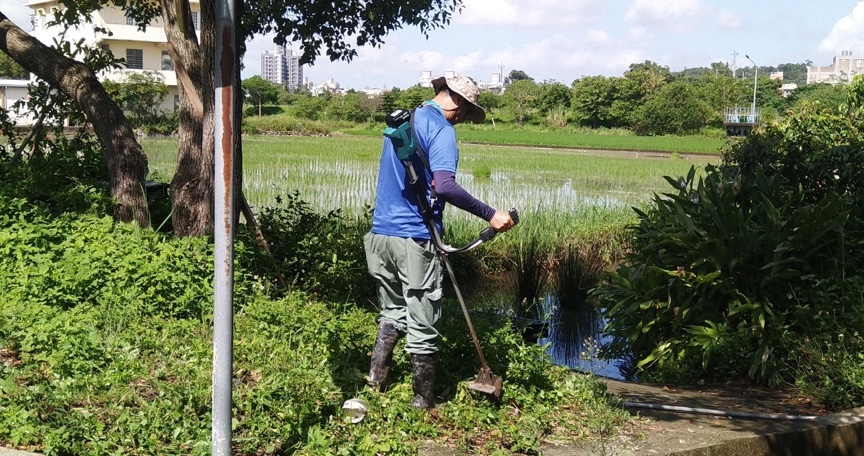
Beyond eliminating chemical pesticides in our own fields, we sought to protect the surrounding landscape by encouraging neighboring farmers to stop using chemical herbicides. Kang-Ming, leader of the parent agricultural group, tirelessly reached out to local growers, gently persuading them to change their chemical spraying habits. To back up his words with action, he led teams of parent volunteers to regularly cut grass for our neighbors. Through these patient, heartfelt efforts, we hope to show that the land should not be poisoned with herbicides, but rather cultivated with care and love for the Earth.
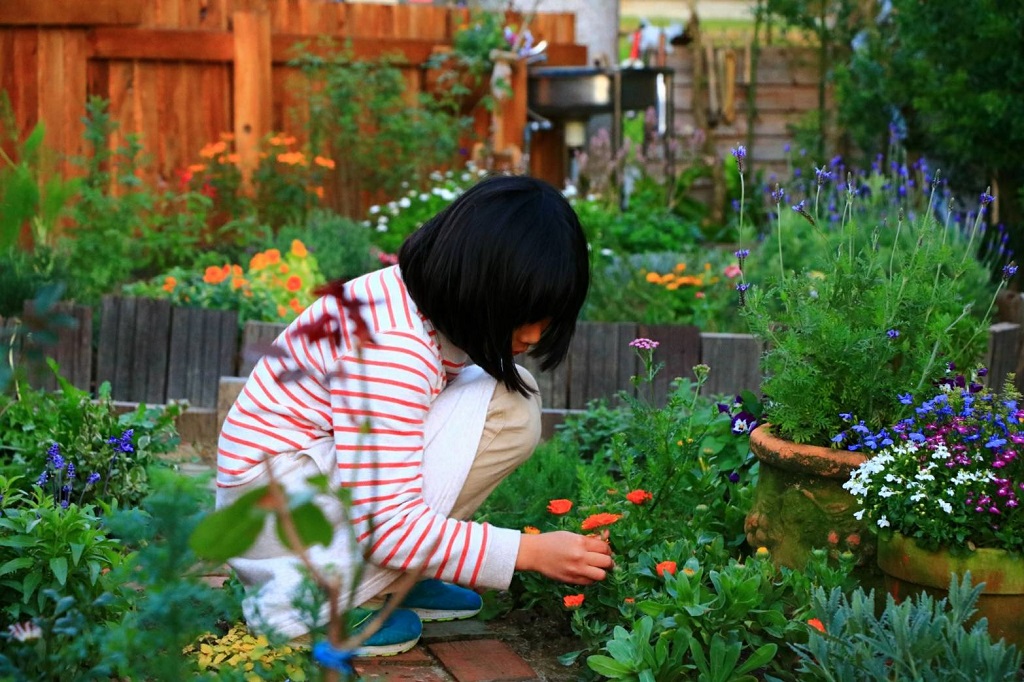
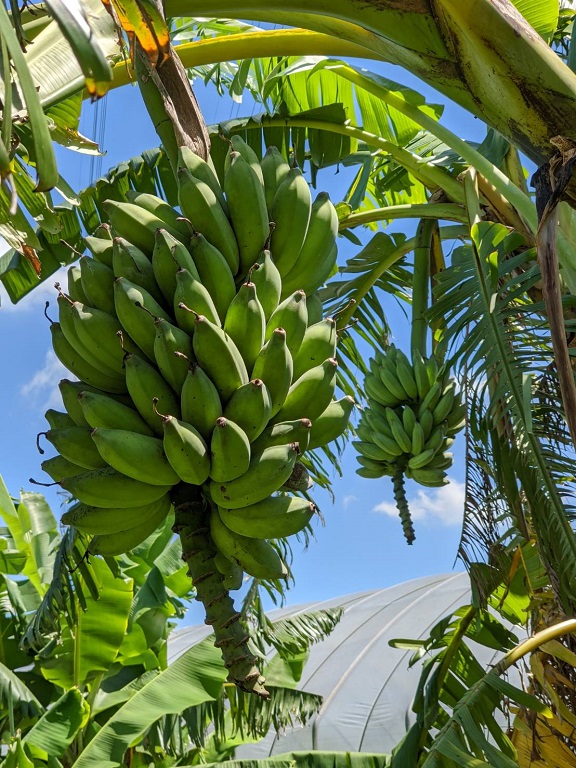
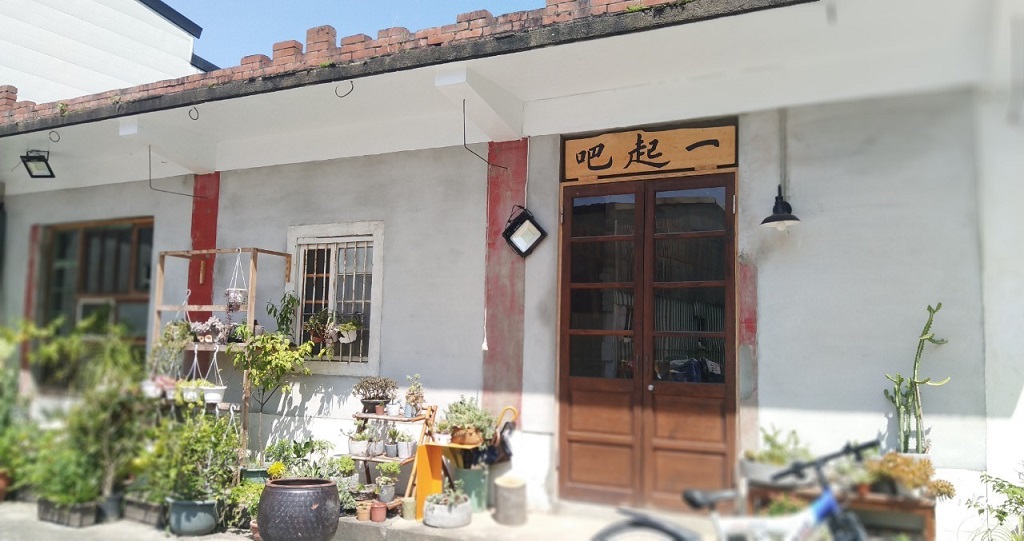
To create a dedicated space where visionary minds of our Organic Village could gather and unite around a shared vision, Honorary President Wen-Hao and his wife Hui-Ching leased a spacious plot of land to establish the “178 Center” (Yi-Qi-Ba Activity Center). This vibrant hub provides a welcoming space for parents, teachers, students, and community members to meet, learn, and grow together. Within it, they also launched “Tsio Hai Shop,” a group-buying service that helps ensure safe, wholesome ingredients reach the dining tables of every family.
We look forward to a near future where the entrance off Sansheng Road leads directly into the Tsio Hai Organic Village—a pure land watched over by the divine. Picture our children walking along the field paths from school to a nearby farmhouse for music class, greeted along the way by the warm waves of sweating urban farmers. Once music class ends, they stroll and dance their way to the art building to paint. After a day’s work in the fields, those same urban farmers cool off under the shade of trees, joining a parent growth workshop before walking hand in hand with their children back home at dusk.
Whenever we stand in the plaza of Sansheng Temple and look out over the Tsio Hai campus, the winding journey of building our school floods back into our hearts. Perhaps it was the deities of Sansheng Temple who guided our community here, or perhaps it was the Tudigong (Earth God) resting just opposite our school who brought us home. In an era where so much of Taiwan’s agricultural land is being lost to industrial rezoning, what our world needs most is a group of loving people who step by step, with hearts full of care, nourish and restore our Earth Mother.