
In Second Grade, children begin to see the world with greater clarity, awakening to natural cycles, interpersonal dynamics, and a developing sense of polarity (good vs. bad, self vs. other). As their individuality emerges, children often explore boundaries, test rules, or seek attention in new ways.
This transitional stage calls for a reshaping of relationships with teachers and classmates, offering a meaningful foundation for learning empathy, self-regulation, and community harmony.
Language Arts
Second Graders encounter the inner challenge of polarity—grappling with light and shadow, self and other, animal instincts and higher ideals. To meet these developmental needs, the curriculum brings animal fables and stories of noble saints. Fables reflect human shortcomings through animal archetypes, while saintly biographies inspire compassion and moral striving. Students engage deeply with these themes through storytelling, group discussion, and personal reflections.
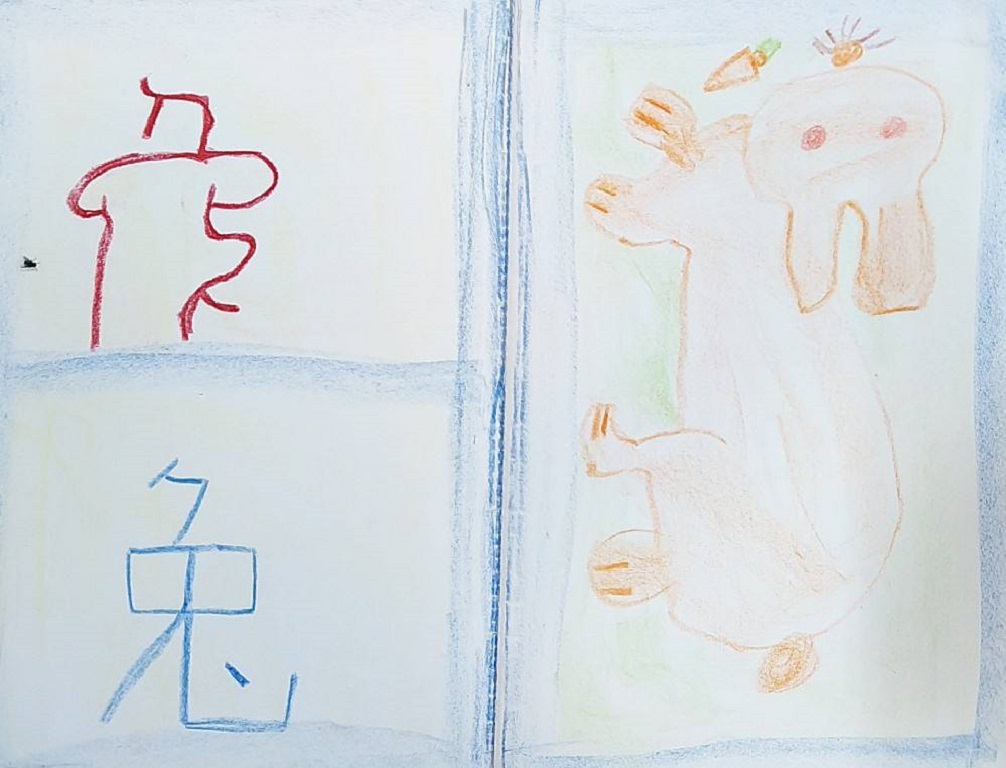
Literacy expands as children are introduced to Zhuyin (phonetic symbols) through vivid imagery, establishing a bridge between sound and written form. Supported by phonetics, children enter independent reading, practice high-frequency Chinese characters, and hone precise articulation through rhythmic verses and tongue twisters.
Mathematics
Grade 2 Mathematics focuses on the four arithmetic operations with natural numbers. To guide children from concrete experience to abstract understanding, teachers introduce concepts through imaginative stories and physical manipulative objects before formalizing calculations into written equations.
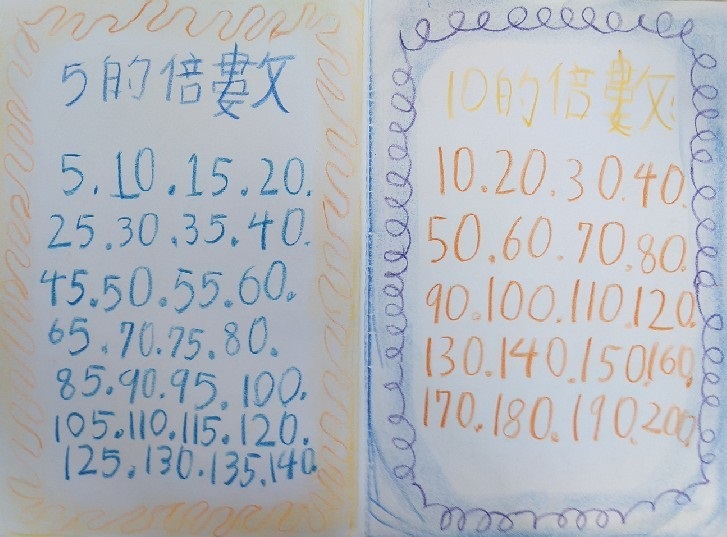
Students progress to multi-digit addition with regrouping (carrying), subtraction with borrowing, multiplication as repeated addition, and division. Mental math is systematically practiced, while multiplication tables up to 12 are memorized through rhythmic body movements, clapping, and stepping. To keep concepts grounded within the child’s developmental comprehension, arithmetic operations in Grade 2 generally stay within the numerical range of 1 to 144.
Form Drawing
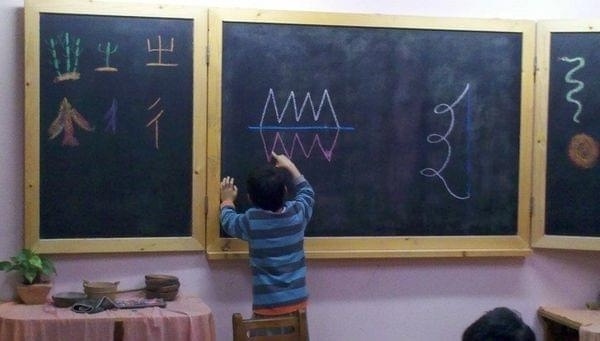
Form Drawing is a signature Waldorf discipline where lines reflect the visible traces of movement. The curriculum guides students through the process of transforming physical movement into defined forms—serving as an expression of the child’s inner space and dynamic forces. Through a child’s form drawings, one can observe the harmonious interplay of their thinking, feeling, and willing.
Building on their First Grade foundation, Second Graders begin with basic geometric forms before progressing to continuous patterns, such as repeating straight and curved line rhythms resembling shifting ocean waves. They then explore vertical and horizontal symmetry, mirror forms, and complex dynamic crossings that balance opposing directions and qualities of movement.
Subject Lessons
◎Wet-on-Wet Painting
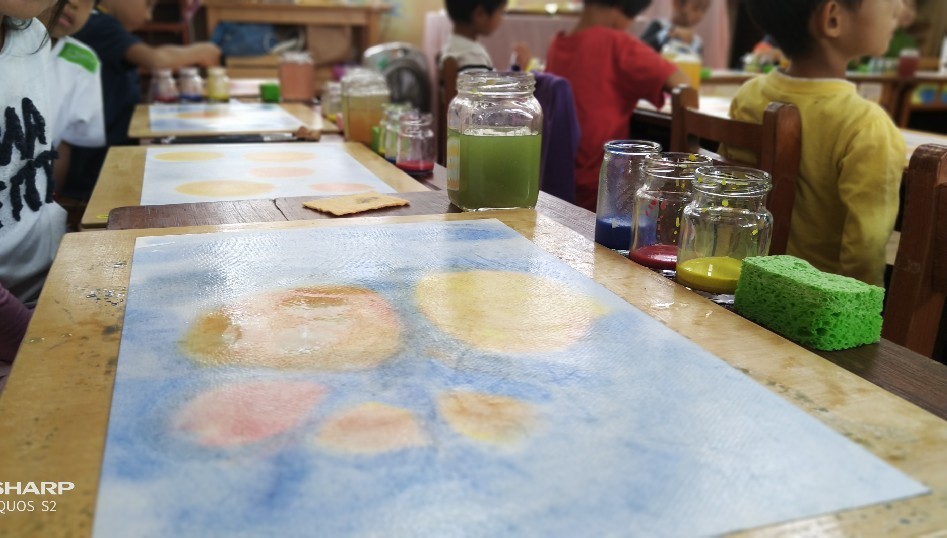
In Grade 2 Wet-on-Wet Painting, children continue working with watercolors on wet paper. Lessons begin with a review of primary color meetings before guiding students to explore color mixing and dramatic color contrasts. Children learn to control brushstrokes and water flow, allowing them to express their inner feelings with growing artistic sensitivity and fluid color transitions.
As the curriculum evolves, teachers integrate imagery from Main Lesson fables and saintly legends into painting activities. Alongside color balance, recognizable figures and archetypal forms gradually emerge on the paper. At this stage, students independently prepare their painting materials and restore their workspace afterward, cultivating autonomy for future learning stages.
◎Movement & Eurythmy
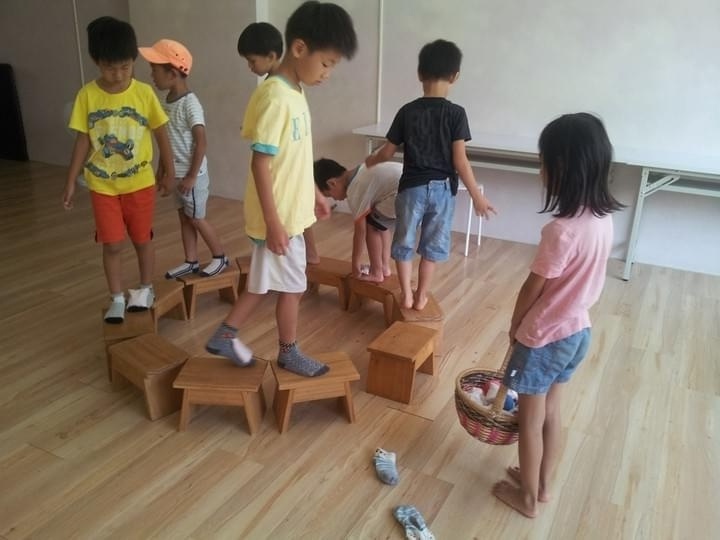
Using rich imagery, musical elements, spoken verse, and spatial navigation, Movement Class invites children to experience musical beats, rhythms, pitch, and melody through their physical bodies. Students embody the musical qualities of spoken language and experience the distinct qualities of straight lines, curves, and spirals in space—engaging all major muscle groups while honing focus, willpower, rhythm, and sensory integration.
In Second Grade, the curriculum introduces the quality of polarities (duality). Activities incorporate inner and outer circles, rapid shifts between long and short beats, expansion and contraction poses, and changing self-and-other spatial dynamics. Depending on the story, children work with beanbags or use copper rods to build precision and rhythm.
◎Handwork
In Second Grade, children step into the world of two-needle knitting (knitting with needles). Teachers guide students through each step using storytelling and rhythmic verses, helping them internalize the sequence of movements through practice.
During this year, children master fundamental skills: tying a slipknot, performing a simple cast-on, executing the knit stitch, and casting off. They also learn essential sewing techniques, including threading a yarn needle, running stitch, whipstitch, backstitch, and tying off secure knots at the end of each work session. By the end of the term, students complete a meaningful handmade project as a gift for themselves.

◎Music
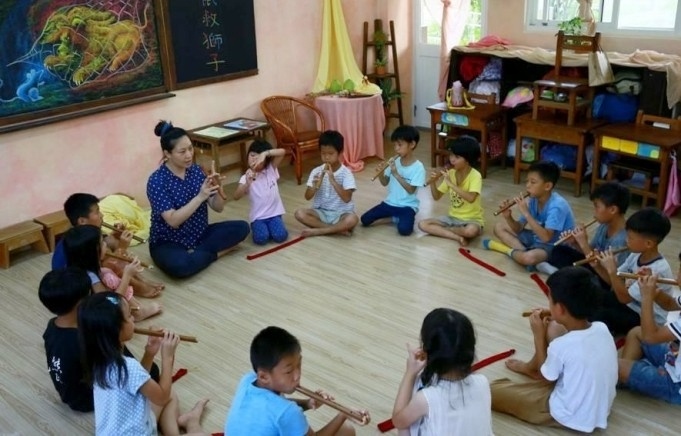
In Second Grade, children continue their journey with the pentatonic flute, expanding their repertoire with seasonal songs and traditional folk melodies that link them to cultural heritage. During music lessons, teachers introduce subtle musical variations within the same song—such as dynamics (forte/piano or strong/gentle) and tempo (fast/slow)—heightening the children’s musical sensitivity and expressive range.
Beyond melodic tone, students explore acoustic resonance using metal chime bars or tubular bells. Listening to the lingering sound echo through the room deepens their auditory focus and capacity for quiet listening, bringing a serene, reverent atmosphere to the music experience.
◎Games
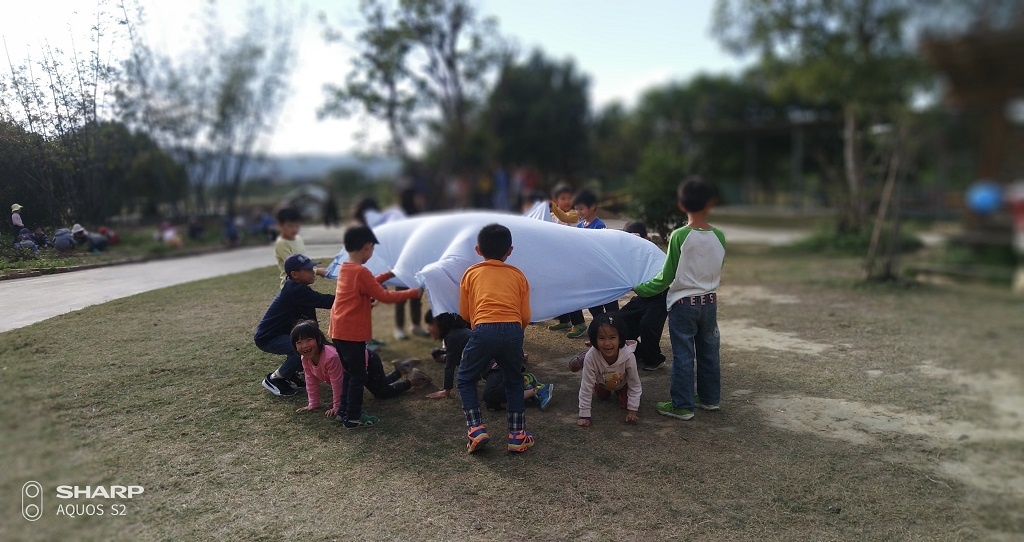
Second Grade Games introduces team-oriented activities designed to help children reshape and harmonize their interpersonal relationships through structured group dynamics. Physically, the curriculum places greater focus on developing muscle strength, explosive power, hand-eye-foot coordination, and quick reflexes. Certain games also incorporate tactical and problem-solving elements, encouraging children to think strategically while staying physically active.
◎English
In Second Grade, English instruction continues to spark children’s curiosity and enthusiasm for foreign languages, encouraging them to playfully imitate sounds, accents, and natural rhythms. Listening comprehension is further developed at this stage, helping students notice the subtle phonetic differences between English and Mandarin while becoming more conscious of their own articulation and confident in speaking out loud.
Teachers create an immersive English-speaking atmosphere through songs, verses, nursery rhymes, fingerplays, movement, and group games, planting fertile seeds for lifelong language learning.
◎Food Education
Building on their First Grade foundation, Grade 2 food education focuses more deeply on structured cooking processes. Lessons place greater emphasis on step-by-step precision and discipline, guiding children through more complex kitchen skills such as basic knife work, stovetop cooking, yeast dough fermentation, and cake batter whipping.
When a recipe fails due to skipped or improper steps, it serves as a meaningful, direct lesson—reminding students of the value of patient practice, care, and practical order in everyday life.

◎Nature Day (Nature Walks)
Grade 2 continues the tradition of a weekly Nature Day, where teachers lead students into nature regardless of weather. Walking consistently rain or shine strengthens children’s stamina and inner willpower while granting them firsthand observation of seasonal transitions. These regular outdoor journeys cultivate deep wonder, acute observation skills, and a lasting curiosity about the living world.
