Grade 9 Farm Practicum at Jin Fu Tian Organic Herb Farm
Foreword
The Farm Practicum marks the second main block of the spring term and serves as the semester’s first major event, hosted at Jin Fu Tian Herb Farm in Dongshi, Taichung. Throughout this three-week immersive farm experience, students not only help farm owner Master Tien restore and maintain the grounds while learning natural farming methods, but also face the deeper challenge of navigating group living and developing independent life skills. Without modern conveniences or direct parental oversight, they learn to care for both themselves and their peers.
In contrast to past challenge trips that lasted at most eight days—where any discomfort or hesitation could simply be endured—an eighteen-day practicum requires far greater emotional self-regulation and mutual tolerance to create a comfortable and harmonious community. Living together around the clock reveals hidden quirks and unique traits never seen in a standard classroom, fostering profound mutual understanding that strengthens the class dynamic for years to come.
Shortly after the school year began, we shared information about the Farm Practicum with the students, giving them time to mentally prepare for “a stay that might not be entirely comfortable” and to begin discussing group work assignments early on. While a few students fretted briefly over having to cook and do laundry by themselves, their excitement quickly eclipsed any worries. The thought of three weeks away from regular classes and constant adult oversight—plus the freedom to explore and shop on weekends—had them eagerly chatting about where to hang out. It turns out children and adults truly have very different priorities!
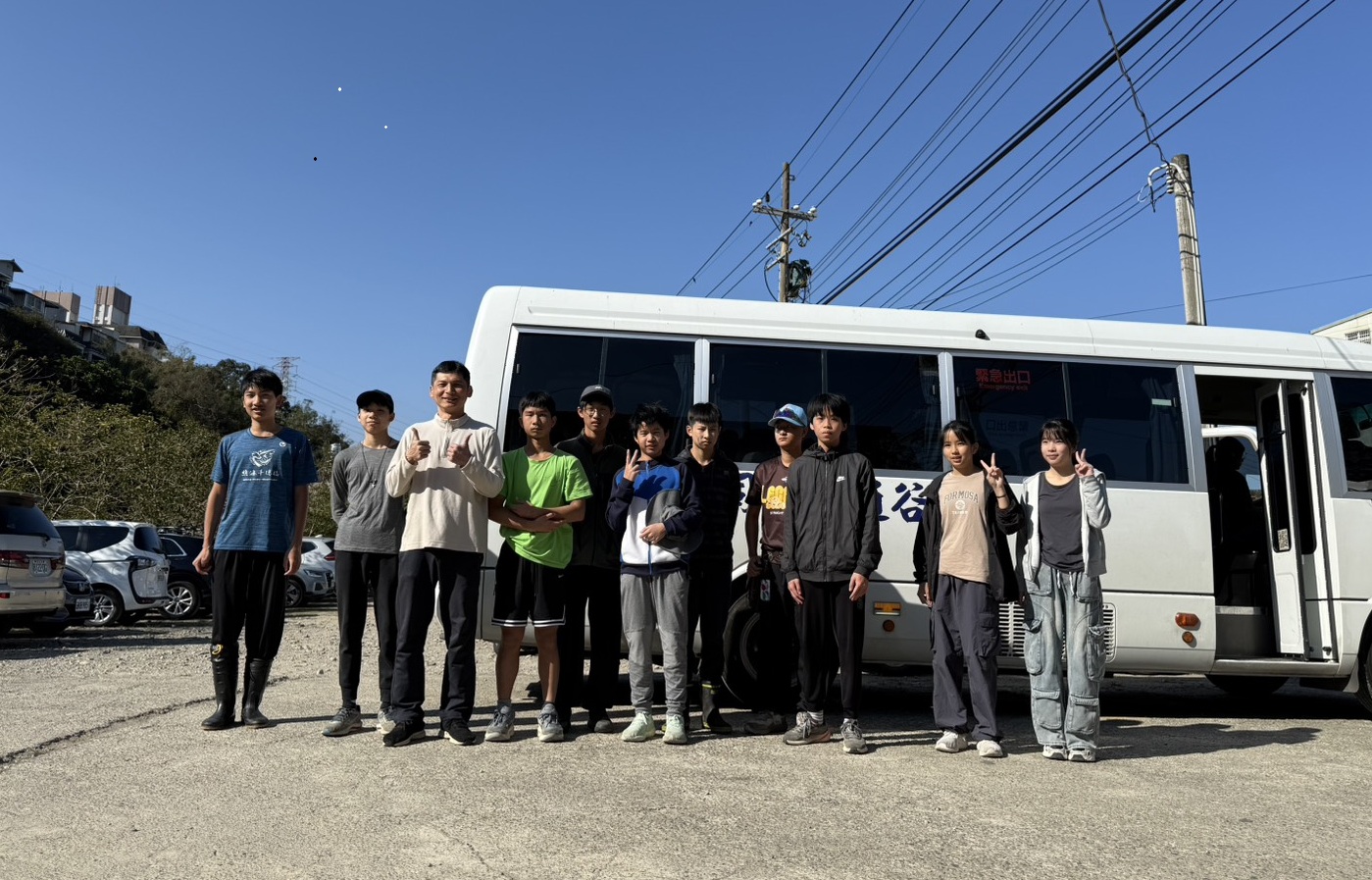
Daily Life
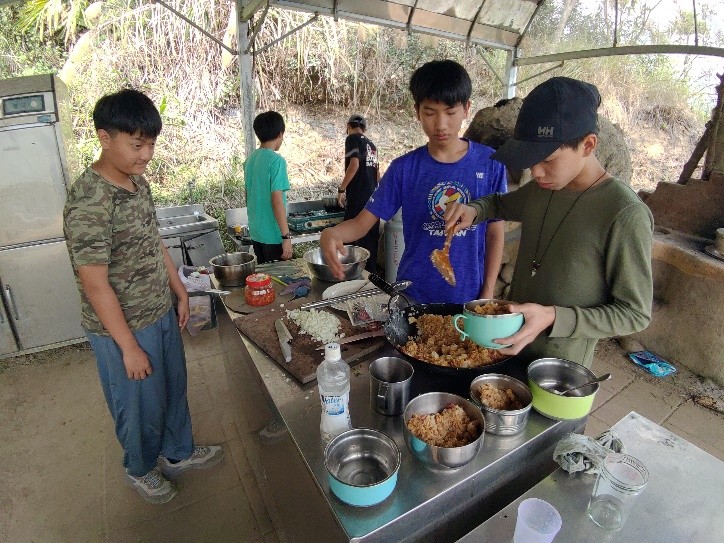
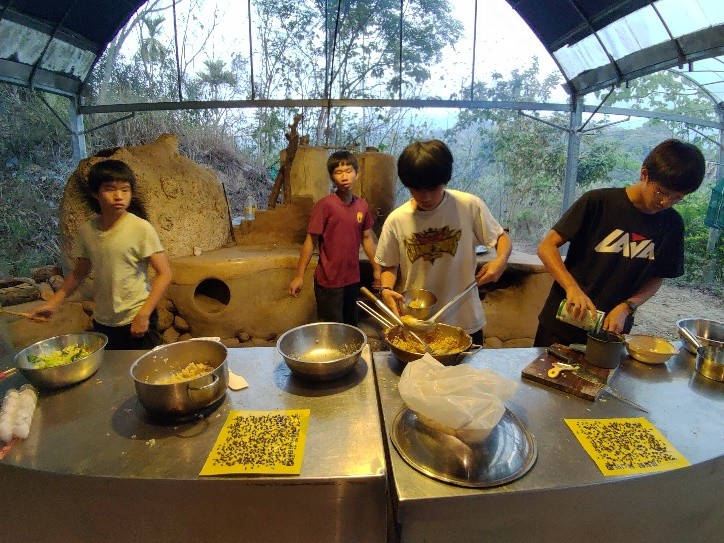
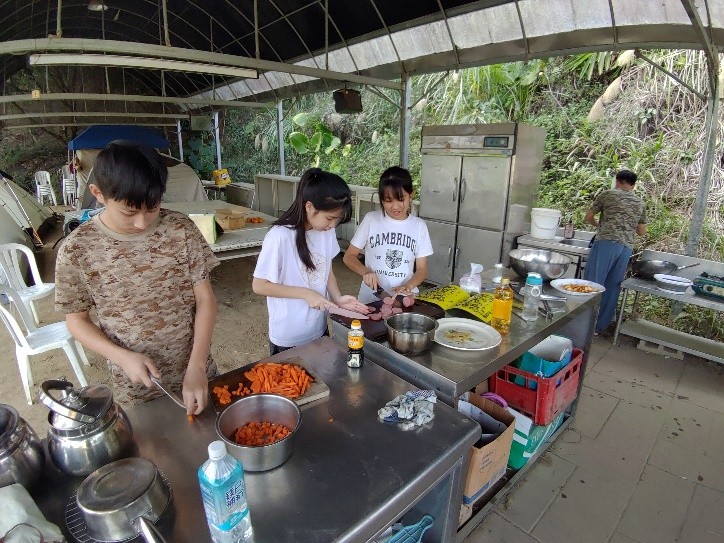
Daily life at Jin Fu Tian revolved around preparing three meals a day, heating bath water, boiling drinking water, doing laundry, and maintaining the grounds. Before setting off, the students divided themselves into three groups to handle food duty—each group responsible for one meal a day, rotating every six days to experience different menus. Their self-designed menus mostly featured fried rice, stir-fried instant noodles, dumplings, various noodle soups, and pre-packaged meal kits.
Among all the tasks, cooking rice on a stove proved to be the greatest challenge. Since none of them had experience cooking rice over a gas flame, I shared a simple technique: bring it to a boil over high heat, turn it down to low, simmer until the steam dies down (about 10–15 minutes), then turn off the heat and let it steam for another 10–15 minutes—always keeping a sharp nose out for any burnt smell to turn off the flame immediately. Their very first attempt was quite a success, with only a light crust at the bottom. However, as different groups took turns and quantities varied, scorched bottoms became a regular occurrence! It seems perfecting stove-cooked rice will take just a little more practice.
Our daily routine at the farm was steady and rhythmic: waking up around 7:00 AM for morning hygiene and breakfast, starting farm work from 8:30 AM to noon, resuming work at 2:00 PM, and taking a break between 4:00 and 5:00 PM to prepare dinner and stoke the fire for bath water, before turning in by 10:00 PM.
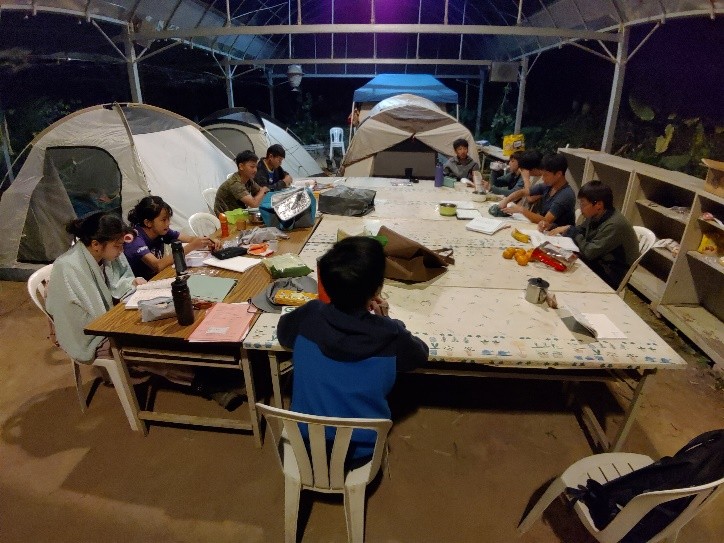
Every morning as dawn broke, the call of bamboo partridges resonated across the fields like a natural alarm clock, waking us up before settling back into silence. The morning kitchen team responsibly rose early to prepare breakfast so everyone was well-nourished and energized for the day’s tasks—a care matched by the lunch and dinner teams. After evening showers and laundry, students spent their nights reading, memorizing vocabulary, finishing homework, or simply turning in early to rest in their tents.
In their free moments between tasks, the children effortlessly created their own entertainment—playing games, tossing balls around, catching frogs and insects, or engaging in lighthearted antics. Boredom was never a concern! Occasionally, however, an accidental step on a water pipe or a minor spill during play gave us a brief scare, keeping farm life lively and unpredictable.
During meal preparations, each team displayed fascinating dynamics. At times, the head cook and assistant cook would bicker over different culinary habits or step-by-step methods. Usually, after a quick, spirited argument, one person would take the lead or both would meet halfway to finish the meal. Meanwhile, the other assistants might watch the drama unfold—sometimes even playfully egging them on or stirring the pot—while others silently prepped ingredients, heading off to their own activities or swatting flies once their tasks were done.
In the first few days, no one quite knew how to gauge portion sizes, and students often needed late-night snacks to feel full. By the second week, however, hungry tummies were no longer an issue, though everyone still enjoyed indulging in a treat or two just to satisfy their cravings.
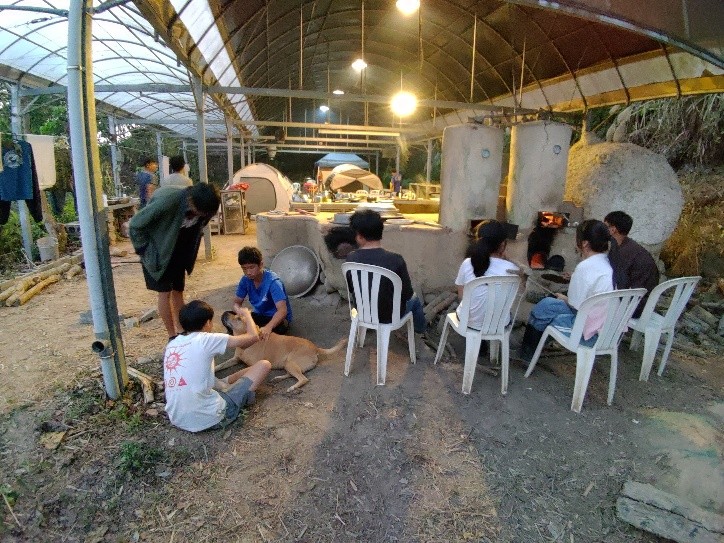
Heating bath water fell to the team not on kitchen duty. Master Tien reminded us that the water needed to reach 80°C (176°F) to ensure enough hot water for everyone. While starting a fire was easy enough, the traditional boiler design wasn’t particularly efficient, taking at least two hours to heat the water to temperature. As a result, if a crew started the fire a bit late or let the flames dwindle, eager complaints would echo across the camp: “Is the hot water ready yet? When can we shower?”
Apart from that pressure, stoking the fire was a fairly relaxed chore. Once lit, it simply required adding firewood at the right time to keep the flames steady. It was common to see a few students gathered around the boiler, chatting lazily about everything from personal hobbies and family life to international affairs and camp gossip.
When boredom set in, some took on the challenge of splitting logs for fun, while others invented quirky games—trying to drop firewood from the top of the boiler, pouring waste oil in hopes of speeding up heat transfer, brandishing glowing ember sticks like magic wands, or fanning the furnace furiously to make the flames shoot upward. It was proof that when boredom sparks creativity and imagination, life is anything but dull!
Drinking water was sourced through filtration, collected in large iron basins, and poured into a giant cauldron over a wood-fired stove. Boiled late at night, the water cooled to a comfortable warm temperature by the next morning. Typically, a single large pot supplied enough drinking water for an entire day of hard farm labor.
It was a smooth process—until unexpected hiccups occurred. Since the stove for drinking water shared the same space as the bath water boiler, ash and soot naturally drifted through the air whenever a fire was lit. If someone forgot to cover the cauldron properly, the water ended up with a few unwanted “extra ingredients,” leaving us with no choice but to pour it out and start over.
The most memorable incident was a massive ant migration across the stovetop. Countless ants swarmed the platform, and despite the water still being piping hot, many fell in and floated on the surface. Stunned by the sight, the students had to thoroughly clean the stove counter before boiling an entire new batch from scratch.
Showering each evening was easily the most thrilling and hilarious part of the day. Because of the long water pipes, everyone had to wait three to five minutes before hot water finally reached the showerhead. As soon as the water was heated, shrieks and hollers would echo from the brave first batch of bathers—complaining either that the initial blast was freezing cold or that the water that followed was scalding hot. Water temperature fluctuated wildly depending on how many people were showering at once.
Meanwhile, the team in charge of heating the water kept a watchful eye on the boiler’s gauge. If hot water usage caused the temperature to plunge, they had to quickly fire up a second boiler so no one was left taking a freezing shower.
Beyond the temperature roller coaster, unwanted guests like moths and cockroaches frequently wandered into the shower stalls, prompting sudden, high-pitched screams (especially from the girls). To top it off, some pranksters loved switching off the lights from outside, drawing loud curses from whoever was inside—only for the victims to seek revenge when the roles were reversed. It was a endless, delightful cycle of mischievous payback!
Laundry was part of the children’s daily routine; if they didn’t keep up with it, they would quickly run out of clean clothes. Everyone took responsibility dutifully without slacking off or trying to take shortcuts—such as saving up dirty laundry for a laundromat trip or letting it pile up for days. Most students washed their clothes right after showering, while a few preferred to do it the next morning.
Fortunately, the bright sun here worked wonders. Even without using the spin dryer (which was far too dirty to use) and relying solely on wringing clothes out by hand, most garments dried completely by the next afternoon. Occasional mishaps were bound to happen—like a shirt slipping off the line onto the ground or getting blown down by a gust of wind, requiring a second wash.
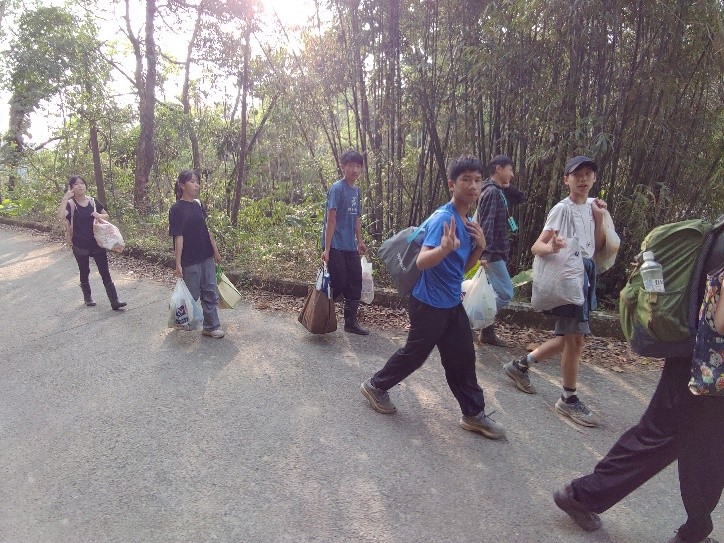
Weekends were dedicated to restocking our grocery supply for the coming week. We would catch the morning bus around 7:30 AM into downtown Dongshi to shop at PX Mart. On our first trip, we didn’t realize the next return bus wasn’t for another three hours, so after finishing our grocery run, we ended up wandering around town for two hours before heading back to the farm.
Although we had originally set aside weekend time for the students to explore the town, they seemed rather disinterested. After a quick stroll, nothing really caught their eye. In the end, their outings usually consisted of popping into PX Mart for snacks and groceries before happily heading straight back to the farm.
The natural environment of the farm brought a vivid array of insects—ants, mosquitoes, flies, bees, and more. Ants constantly paraded across refrigerator doors and wooden ceiling beams, occasionally dropping straight down onto our tables. Any food left out quickly drew a crowd, though when boredom struck, both the students and I found endless fascination in catching a few ants to feed the antlions in the dirt.
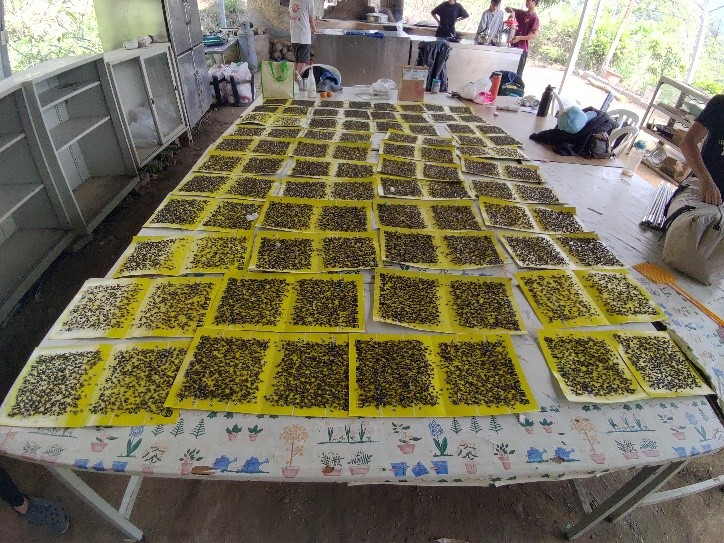
Flies, however, were our greatest nuisance. Because the farm uses natural compost, flies were everywhere, prompting us to hang flypaper to maintain food hygiene. Over our 18 days at the farm, we used more than 55 sheets of flypaper, each completely covered in a thick carpet of flies—a sight that would give anyone with trypophobia serious goosebumps! Yet for the kids (and myself), it became another source of quirky entertainment. Some would use small twigs to press down struggling flies, ensuring they couldn’t escape. Flypaper wasn’t enough, though; during a grocery run, we bought flyswatters, and a few boys turned it into a lively competition to see who could rack up the highest count.
Paving the Path
The farm’s main artery is a concrete road stretching straight from the entrance to the highest plateau—where our camp was set up—dividing the property into distinct left and right sections. Branching off from this central spine are simple dirt paths leading to other areas.
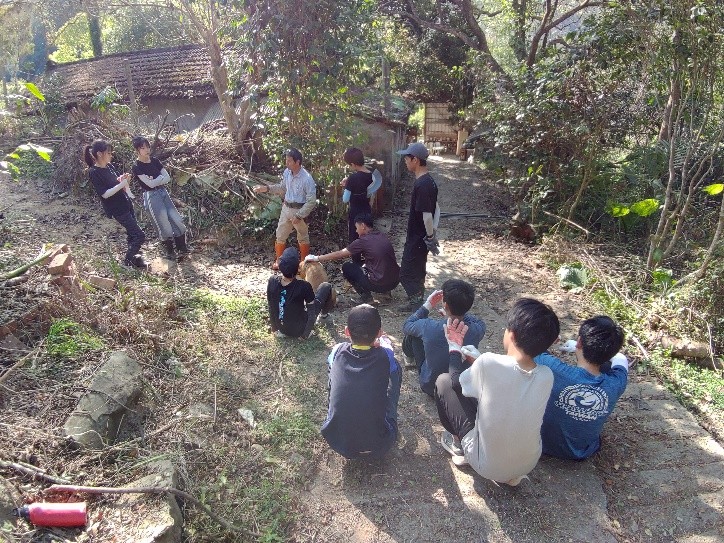
Whenever heavy rains hit, one dirt path in particular suffered severe erosion, washing away topsoil and causing the walkway to sink over time. Since it was first carved out, the path’s ground level had dropped by more than ten centimeters. To slow down further loss, Master Tien asked us to pave the trail using salvaged concrete slabs.
Why not simply pour fresh concrete? Local regulations require payment of specific administrative fees for poured concrete surfaces. However, assembling individual slabs piece-by-piece—much like a giant jigsaw puzzle—is exempt from these fees. And so, our slab-paving mission began!
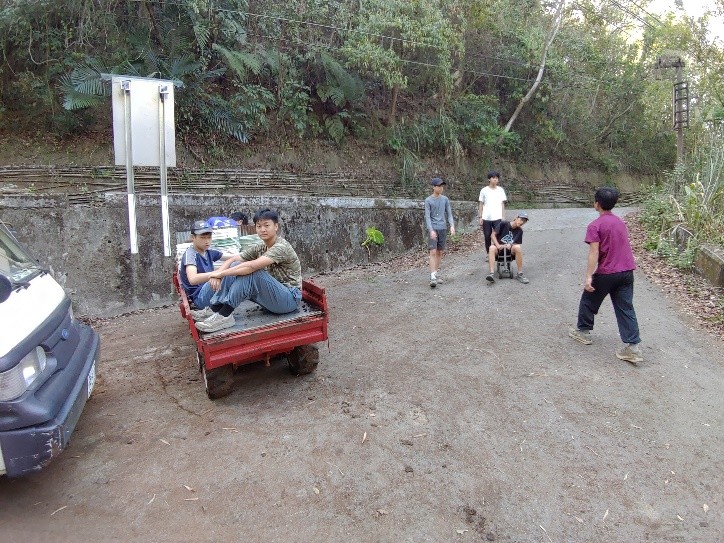
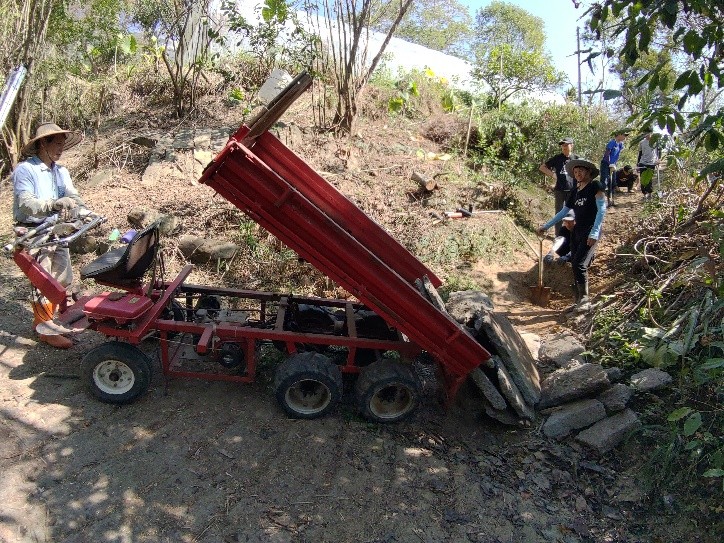
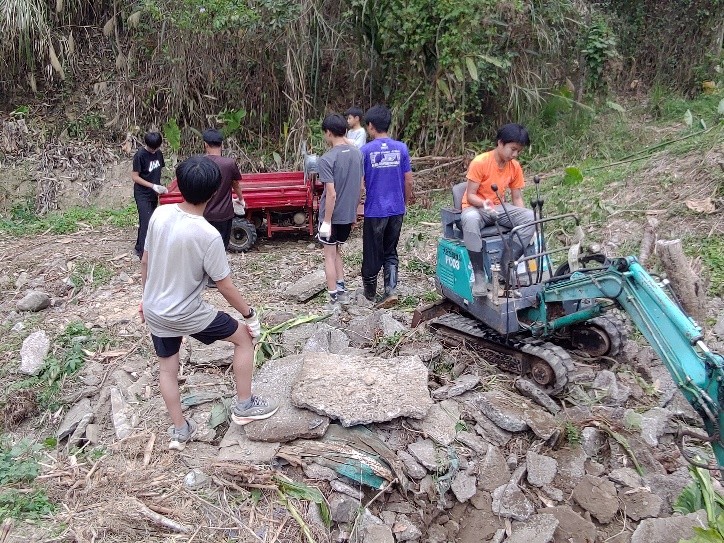
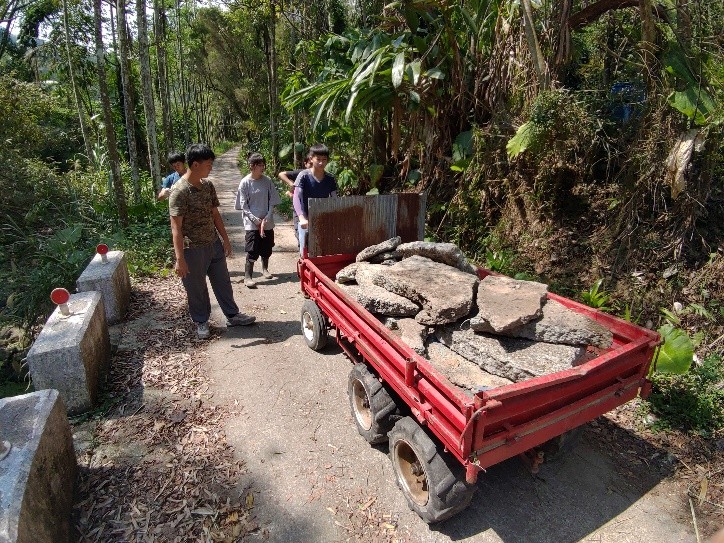
The salvaged concrete slabs, varying in size, were piled along the slope near the farm’s main gate—left behind after a neighbor broke up an old concrete road and Master Tien had them hauled over. Moving these heavy, cumbersome slabs required serious machinery, so Master Tien offered to teach a few boys how to operate a farm utility vehicle (commonly known as an “Iron Ox”) and a mini-excavator.
Their eyes lit up instantly. Everyone was eager to take the controls. Guided by Master Tien, the boys transformed from hesitant novices into confident operators in just a few days. Soon enough, they could manage the machinery completely on their own without supervision, even turning around to mentor other curious classmates who wanted to learn.
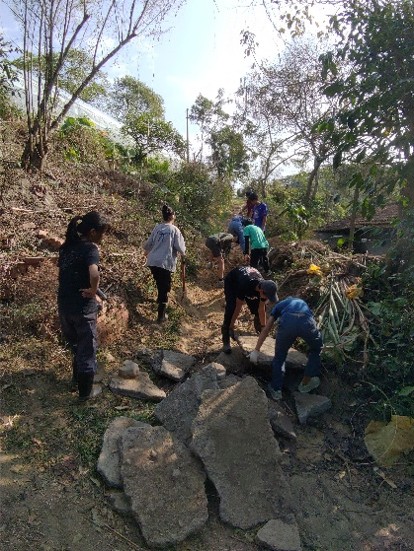
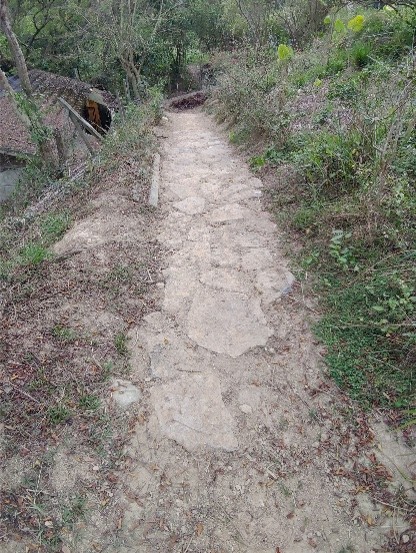
Slabs that could be lifted by hand were carried directly onto the utility vehicle, while those tightly stacked or wedged into the pile were pried up using the mini-excavator before being loaded. Once hauled to the site, the paving crew faced their next puzzle: because the concrete slabs varied in thickness, students had to excavate the earth to custom depths and select matching shapes and sizes, fitting them together like a giant jigsaw. They worked carefully to keep the path sufficiently wide and level so farm vehicles could pass through smoothly.
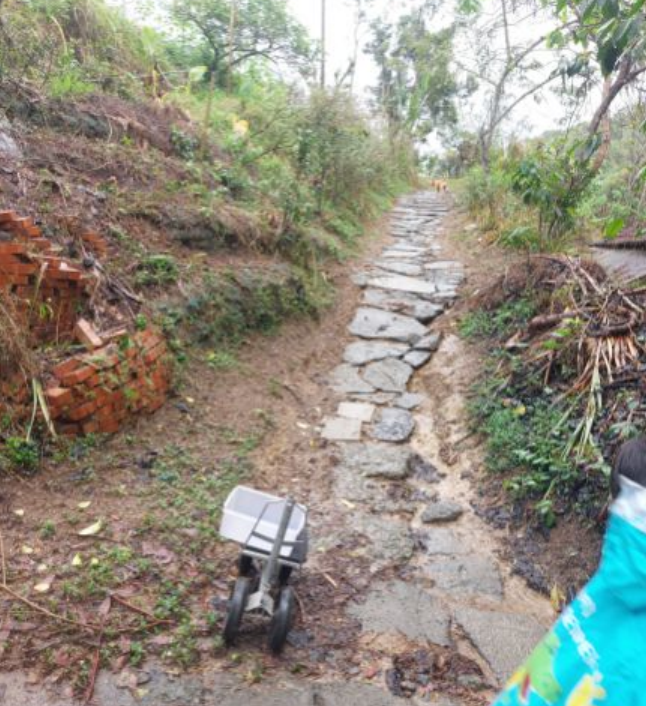
This challenging project spanned about a week, completing roughly 80 percent of the planned pathway until all usable slabs were completely exhausted. Inspecting the finished trail, a delighted Master Tien smiled and declared he would name the passage “Tsio Hai Road”—expressing his deep gratitude for the students’ hard work in saving the farm from further soil erosion.
A few days after we departed the farm, Teacher Hui-fen, the co-owner of the farm, sent us a photo taken after a heavy downpour. The rain had washed away the surface dust to reveal the solid concrete beneath, beautifully showcasing the lasting fruit of the children’s hard work.
Biodynamic Compost (BD Compost)
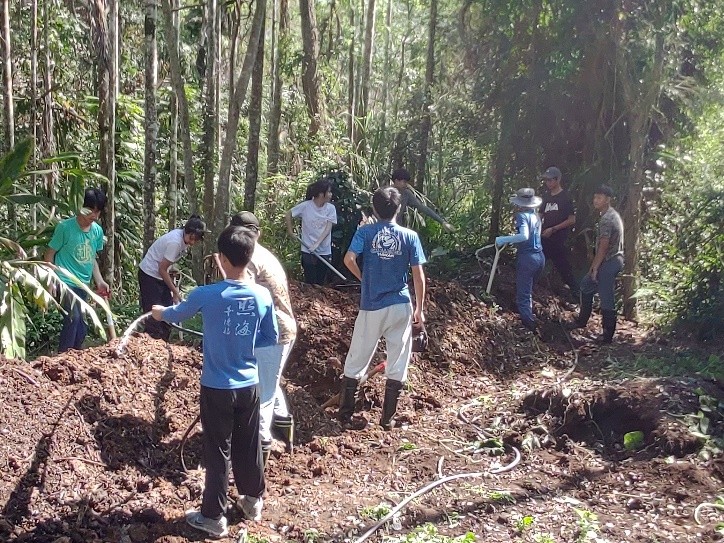
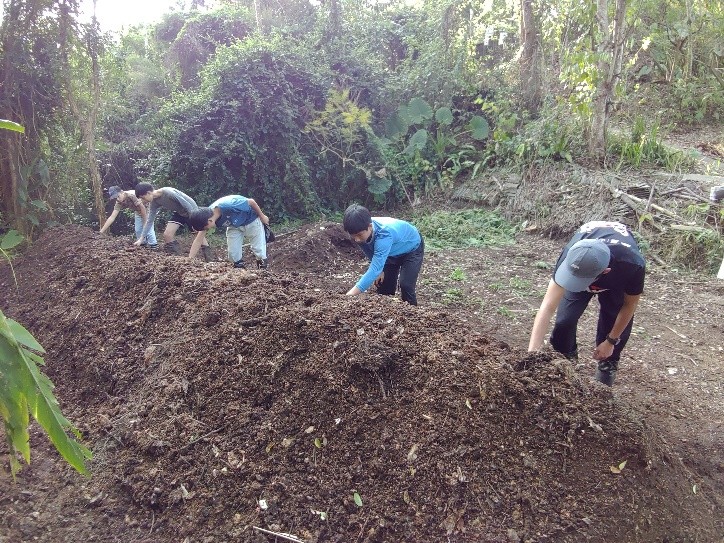
On the left side of the farm entrance lies an open space dedicated entirely to composting. Our very first task upon arriving was turning and watering the pre-mixed compost, allowing air to blend thoroughly with the organic matter to sustain fermentation. During active decomposition, internal temperatures inside the pile can soar to 50–60°C (122–140°F), sending waves of rising steam that we could feel with every turn of the pitchfork.
Once the turning was complete, it was time to introduce the Biodynamic preparations (BD 502–507). Preparations BD 502 through BD 506 are solid compounds, crafted by wrapping various dried flowers—each representing distinct planetary forces—in compost, then rolling them into sphere-like shapes similar to glutinous rice balls. Using a long wooden pole, students poked five evenly spaced holes into the heap to insert BD 502 through BD 506.
Finally came BD 507, a liquid preparation made from valerian blossoms. The students stirred it continuously by hand for 20 minutes before spraying it evenly across the compost pile. With the preparations properly in place, all that remained for our BD compost was patient waiting.
On our first Saturday at the farm, at Master Tien’s invitation, we visited the Liaoyu Horticultural Therapy Garden in Fuxing, Changhua, to make Biodynamic (BD) cow manure compost. This event brought together interested partners from various communities, resulting in a lively and welcoming turnout.
The activity kicked off with the hosts inviting everyone to make traditional taro cakes (yu-tou-kue) by hand for lunch. Gathered around the tables, participants—some skillful, others endearingly clumsy—shaped the ingredients together, evoking the warm atmosphere of large family reunions during traditional holidays. Though the students were initially a bit shy around so many unfamiliar faces, they joined in with encouragement from our hosts and made a few cakes of their own.
Once the food was prepared, everyone headed out to the adjacent field to build the compost heap. The foundation was crafted with bamboo poles to elevate the pile, followed by alternating layers of fresh grass, dried hay, and cow manure—with water applied periodically to maintain moisture. We kept stacking until the pile reached about 150 centimeters high, resembling a giant, rectangular layer cake. Even under the beating sun, the students worked with dedication, stepping up proactively whenever help was needed without a single complaint, earning glowing praise from everyone present.
After finishing the heap, we retreated to the shaded tents beside the farmhouse for lunch. Sitting in small groups, everyone chatted, laughed, and ate to their hearts’ content before we made our way back to the farm.
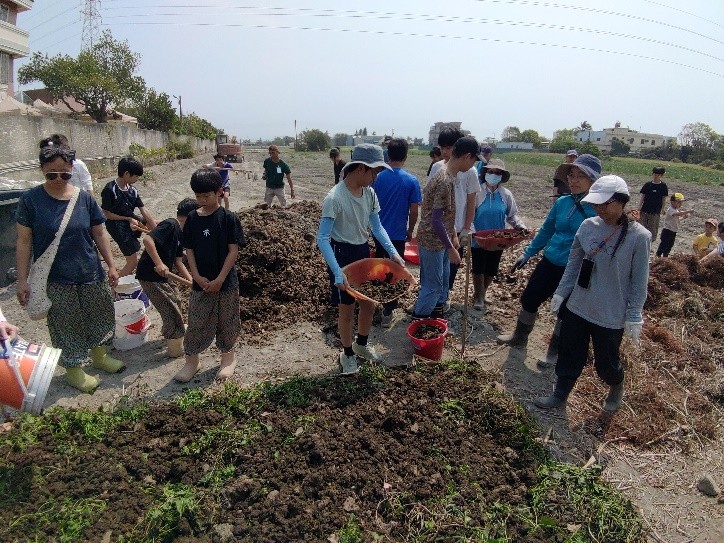
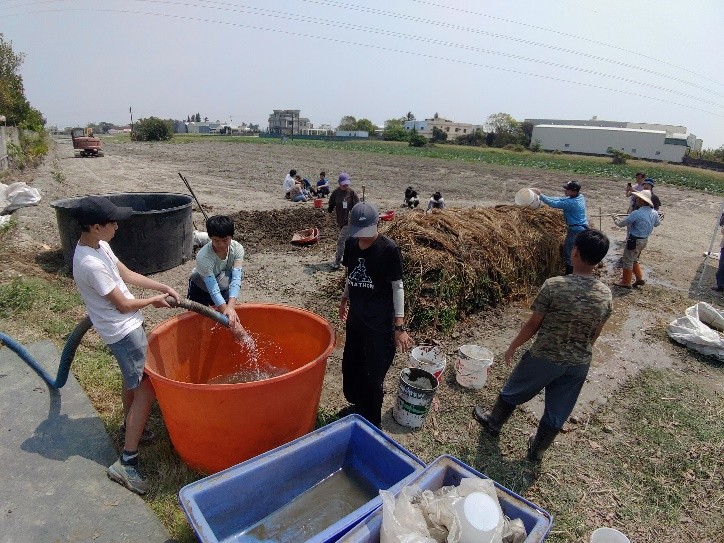
Back at Jin Fu Tian Farm, creating a fresh batch of compost from scratch meant starting with material collection—specifically sawdust, cow manure, and fresh grass.
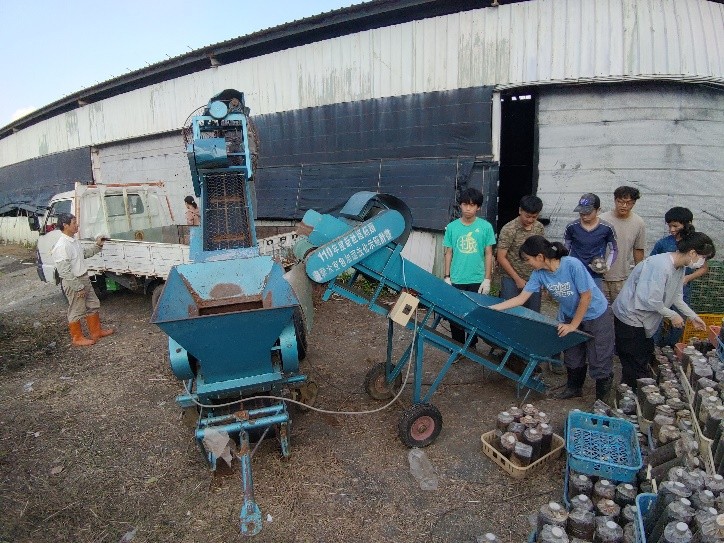
The sawdust was gathered from discarded mushroom bags at an organic mushroom farm in Xinshe, about a half-hour drive away. The grower, Mr. Han, is a young farmer whose dedication to organic farming and interest in Biodynamic agriculture drew him and Master Tien together. His friendly, easygoing nature quickly earned him the affectionate nickname “Mushroom Man” from the students.
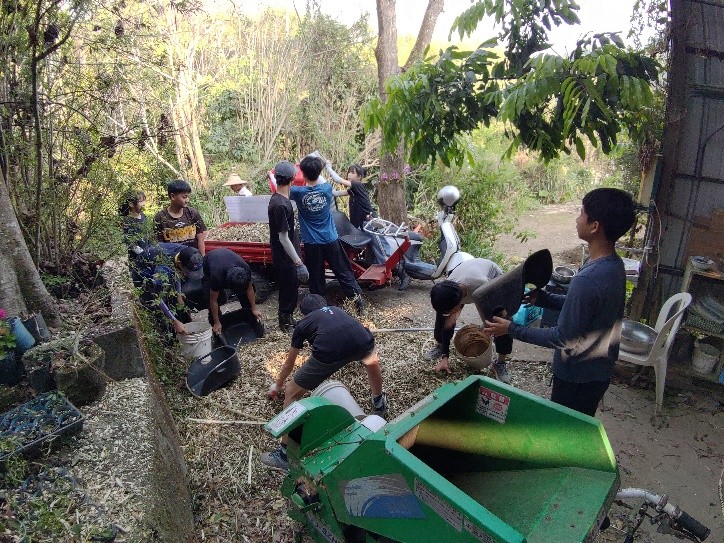
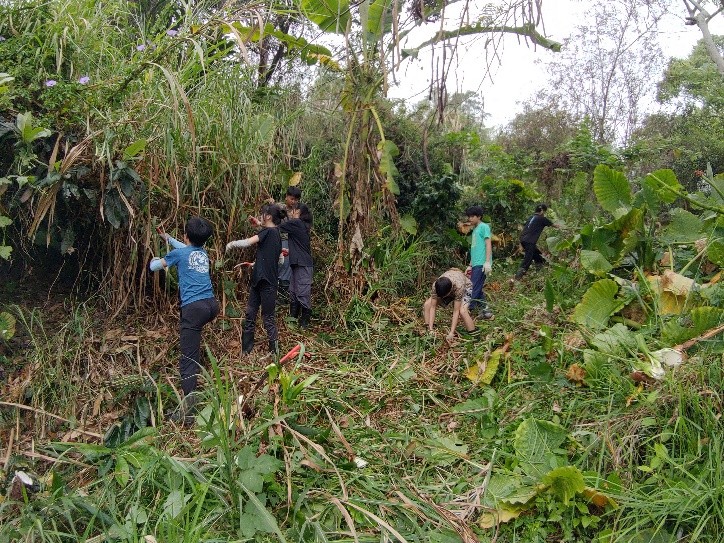
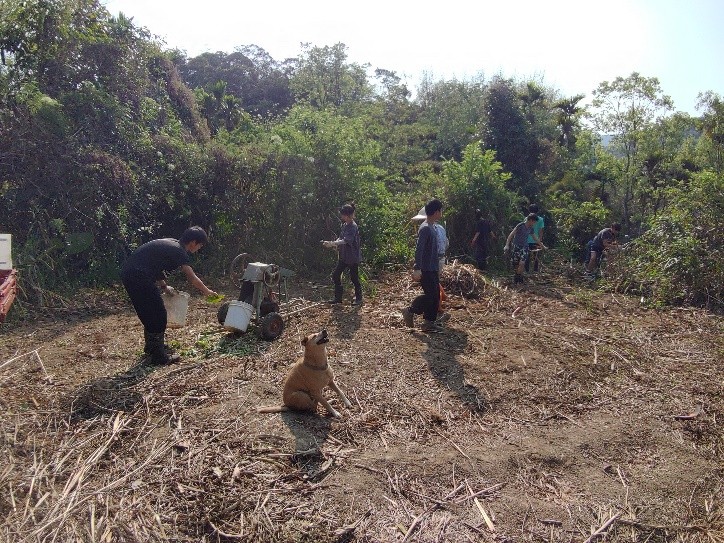
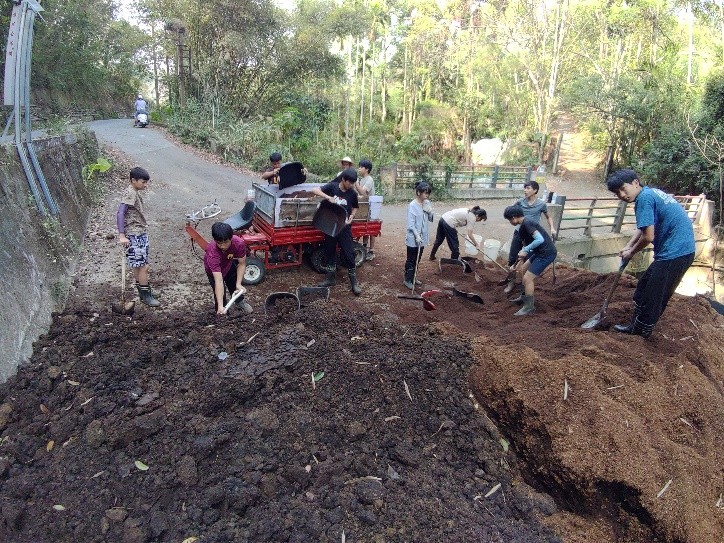
Collecting sawdust from the mushroom bags was straightforward: bags were dropped into a feeder that funneled them into a shredder. Once pulverized, the sawdust and plastic bags traveled into a rotating wire-mesh separator to strip away most of the plastic, allowing the clean sawdust to fall into a truck bed below. This operation ran for several days, yielding multiple truckloads that were piled on the open ground near the farm gate like a mini mountain. As the process grew routine, the crew size shrank from six down to just two per trip. Meanwhile, two full flatbed trucks delivered cow manure from Miaoli, creating a mound almost as tall as the sawdust. For the fresh grass, the team spent nearly two days clearing overgrown elephant grass, giant elephant’s ears (Alocasia), and wild weeds along the nearby hillside, running everything through a wood chipper.
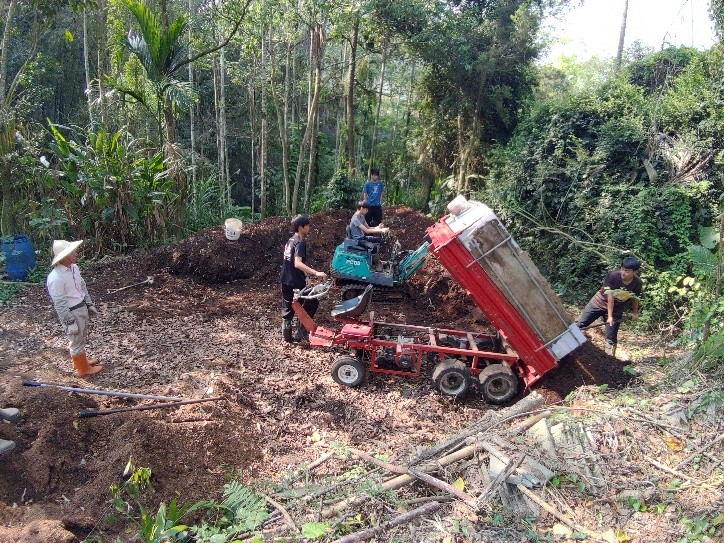
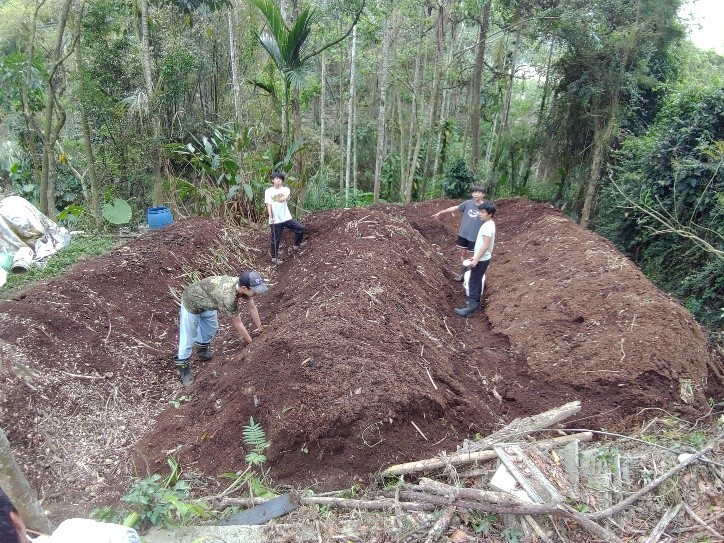
Once all materials were assembled, students used dustpans to load the utility vehicle with a 2:1 ratio of sawdust to manure, topped with one dustpan of fresh grass. The mixture was hauled to the composting site and shaped into long windrows using the mini-excavator and hand rakes. It was pure physical labor, requiring endless shoveling and hauling. Fortunately, the lulls while waiting for the utility vehicle to make round trips offered welcome breaks. When boredom crept in, the children quickly invented creative pastimes—digging sawdust tunnels, tossing baseballs, throwing dried manure, riding pull-carts, and eventually competing to see who could load a truck bed in record time.
By the final morning, all materials had been transformed into three long compost windrows. After inserting the BD preparations and admiring the finished heaps, everyone shared a deep sense of accomplishment—along with a quiet appreciation of just how long it would have taken Master Tien to complete such a monumental task single-handedly.
Daycare Center Visits
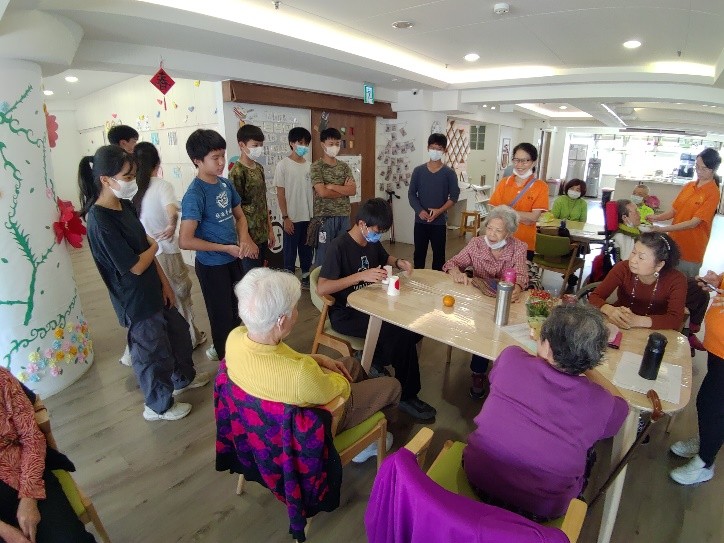
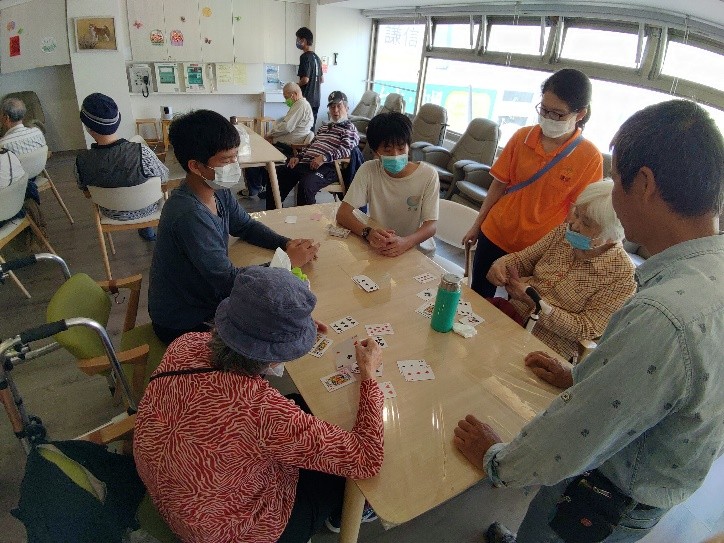
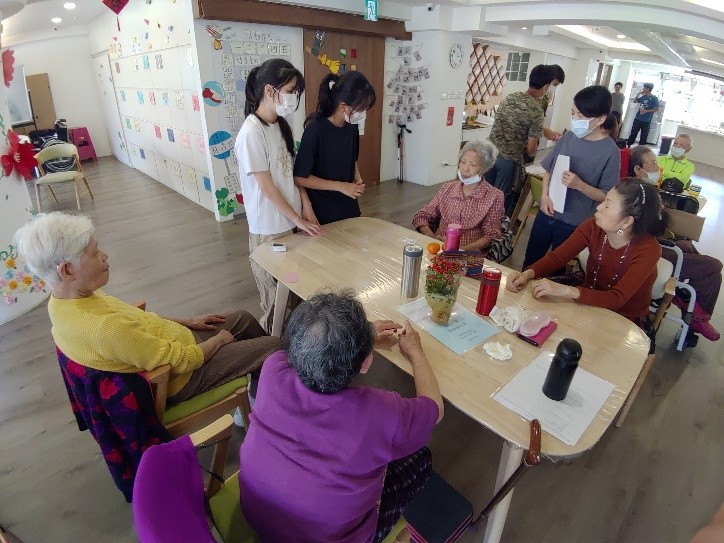
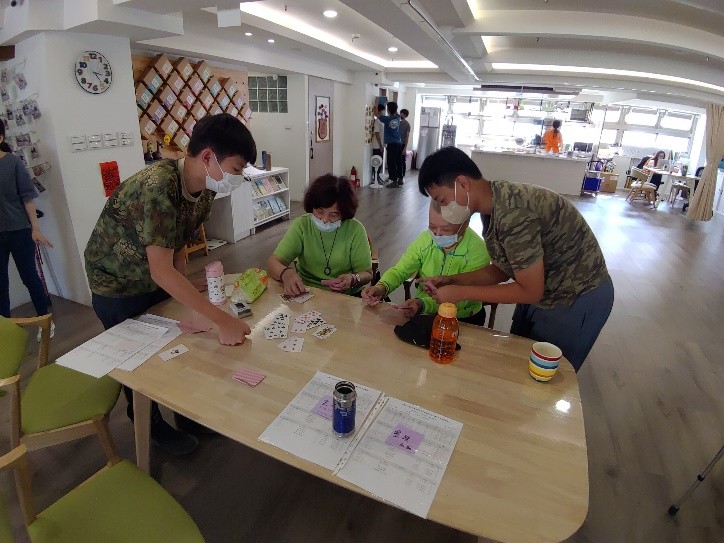
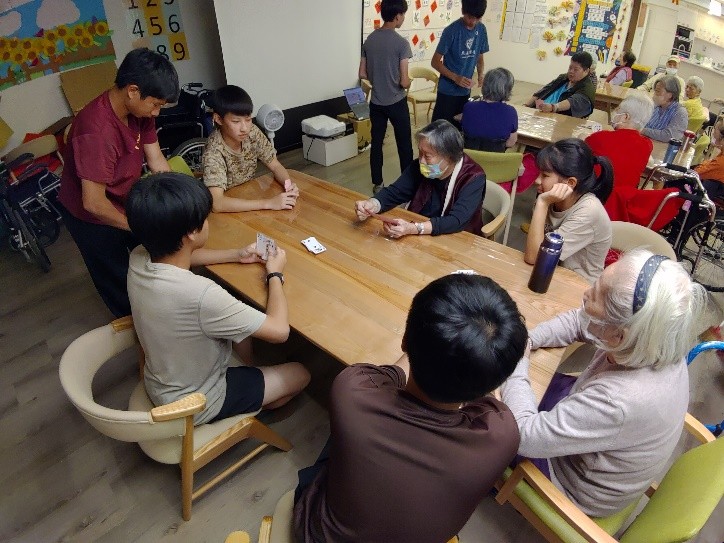
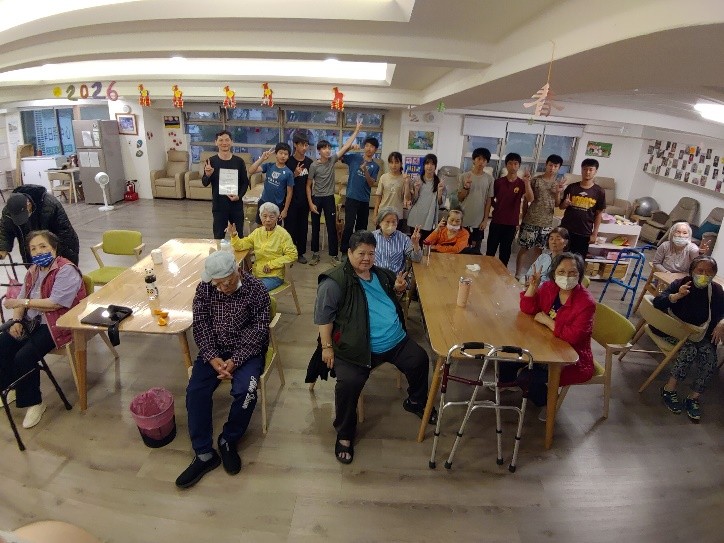
The idea of visiting senior daycare centers came from our early discussions with Master Tien. Our goal was to give the students a opportunity to experience different facets of life beyond their farm work. Because Master Tien frequently visits senior centers in Taichung and has built warm connections with the elderly residents, he helped organize two special visits for our group. When the students first learned about the plan, they felt a bit anxious—unsure of what to do or how to interact with the seniors. After much brainstorming, they decided to prepare interactive games, magic tricks, and card games to bring along.
We visited the Chien-Shin and Gong-Xue Senior Daycare Centers. Most residents here experience reduced mobility or slower cognitive responses, requiring attentive caregiving. Much like a school, the center runs scheduled daily activities to keep the seniors physically and mentally active before their families pick them up in the evening.
When the students arrived at Chien-Shin for their first visit, they stood shyly to one side. After a moment of hesitation, Lang-Xuan and Jin-Yu stepped up to lead off the performance. Lang-Xuan kicked things off with a group game to break the ice, but because many seniors were hard of hearing and moved slowly, it didn’t quite get the enthusiastic response we hoped for. Jin-Yu followed with a magic routine, though few residents seemed able to follow along. Realizing they needed a change of pace, the students huddled up and adapted their strategy: instead of performing on stage, they moved from table to table. The closer proximity made interaction far easier and brought much warmer responses from the elders.
Making Jam and Herbal Vinegar
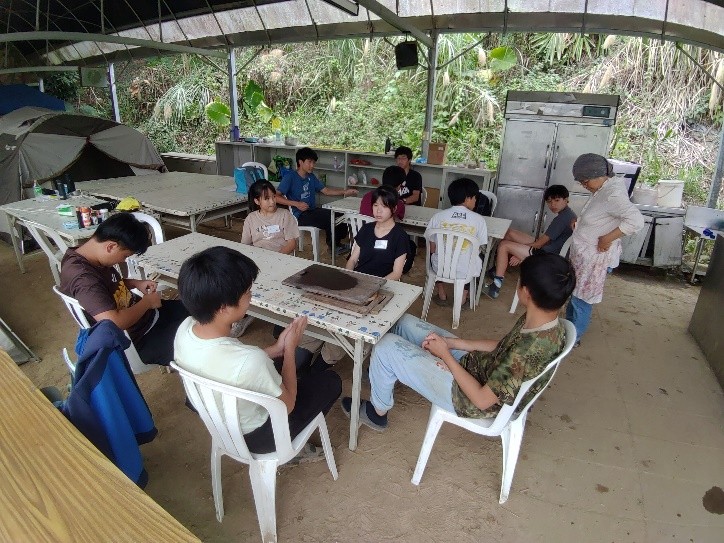
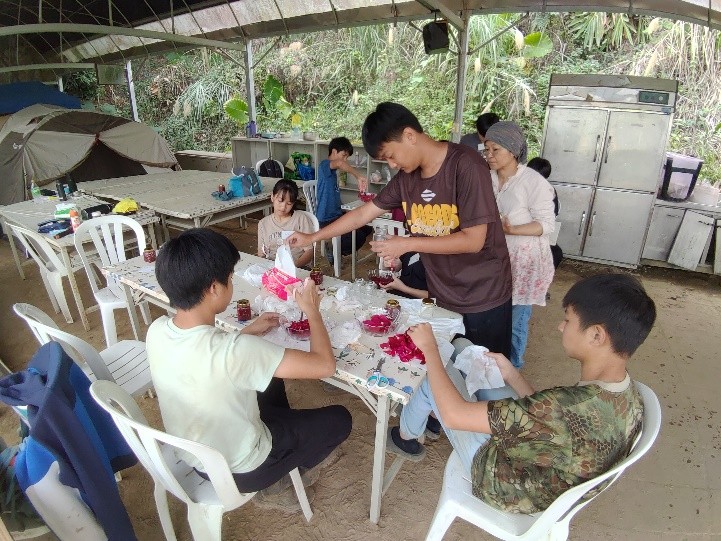
The farm cultivates a rich variety of aromatic herbs, including a deep red perfume rose whose intense, sweet fragrance makes it ideal for crafting jams, herbal vinegars, or floral hydrosols. On our second-to-last day at the farm, Teacher Hui-fen guided the students through making homemade rose petal jam and rose vinegar.
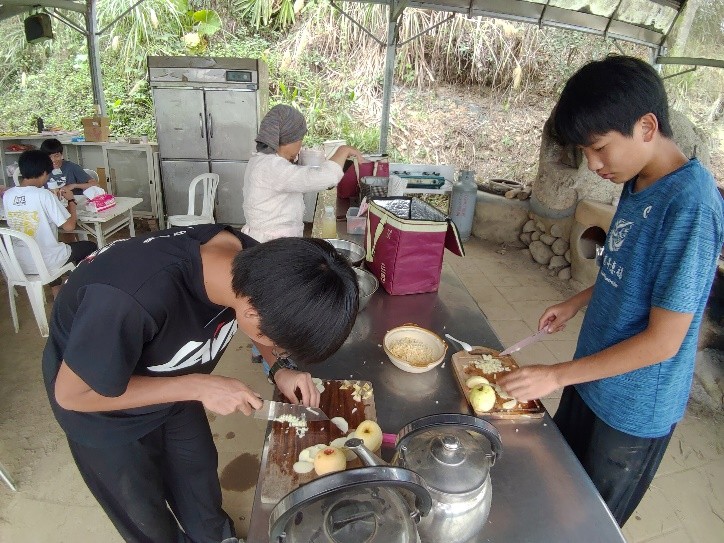
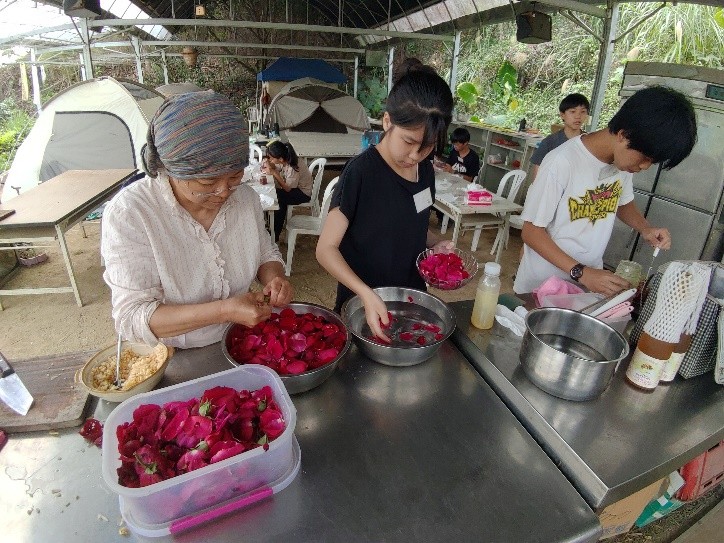
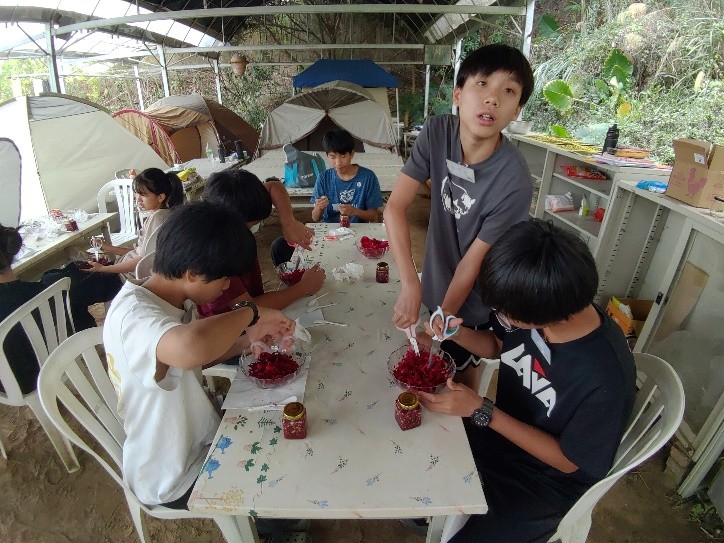
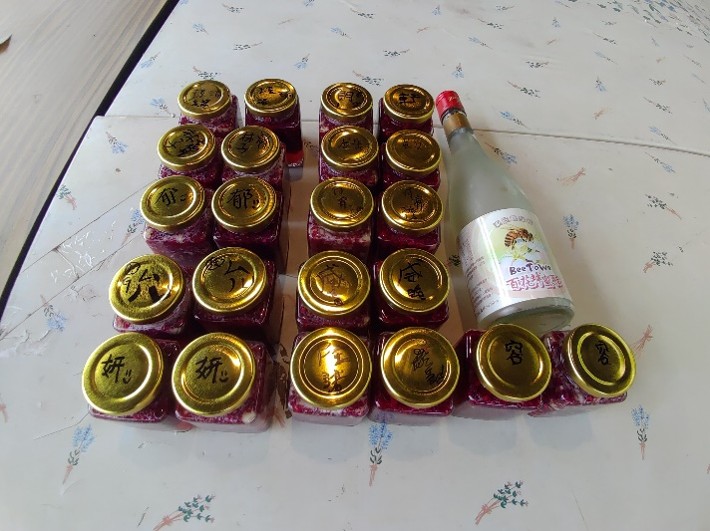
Before diving in, everyone helped clean the workspace, tables, and cookware. Each student received three fresh roses, plucking the petals, culling any bruised pieces, and rinsing them gently in clear water. The petals were finely snipped with scissors and packed into sterilized glass jars. Meanwhile, two students peeled and finely diced organic apples, adding them to the jar along with organic honey. Stirred thoroughly with a spoon, the aromatic rose petal jam was complete. For the rose vinegar, we simply swapped the honey for honey vinegar.
Once the jars were filled, Teacher Hui-fen led a practical cost analysis lesson. Factoring in raw ingredients, packaging, and labor hours, the final cost came to over NT$400 per jar. This hands-on breakdown gave the students a clear view of how raw farm herbs transform into market-ready products, offering them a tangible glimpse into the economic realities of farm-to-table craftsmanship.
Concluding Reflections
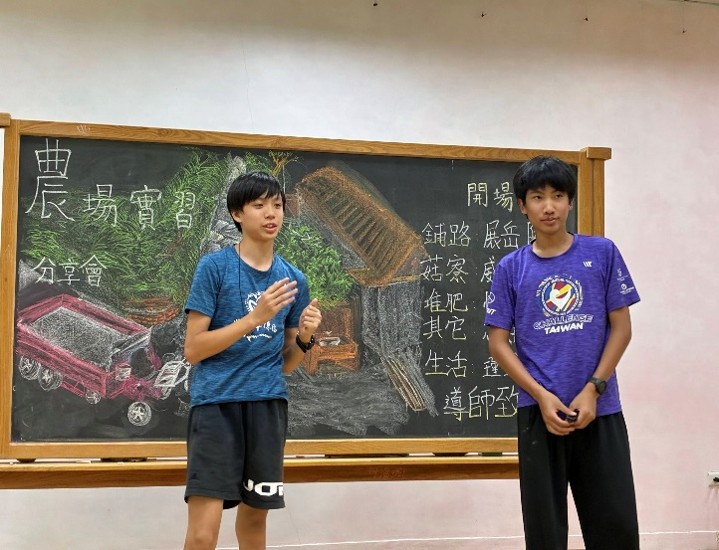
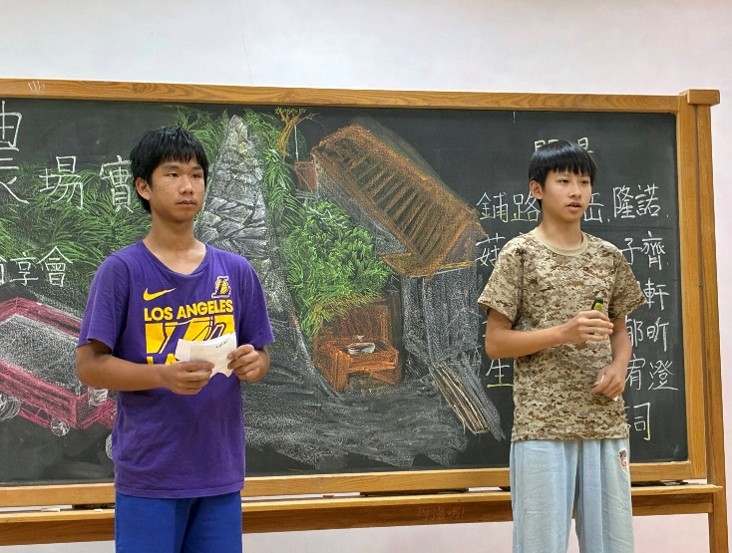
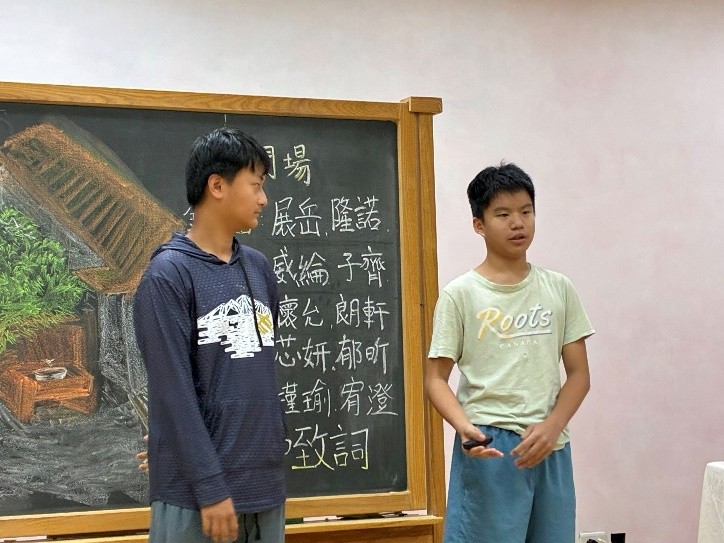
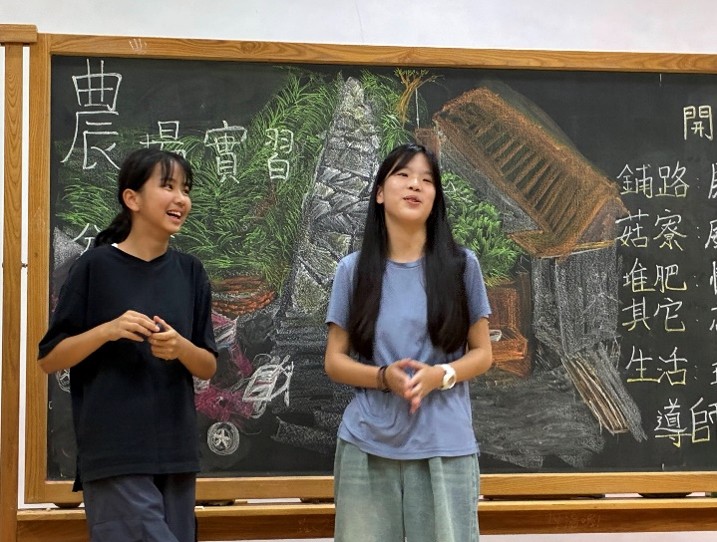
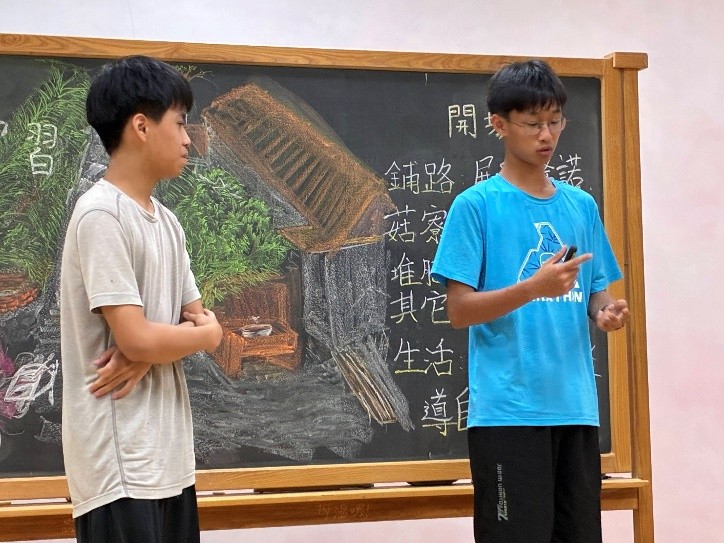
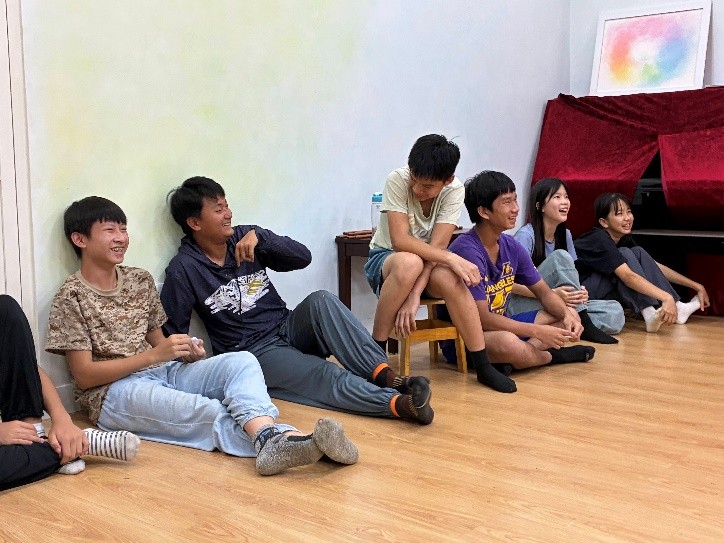
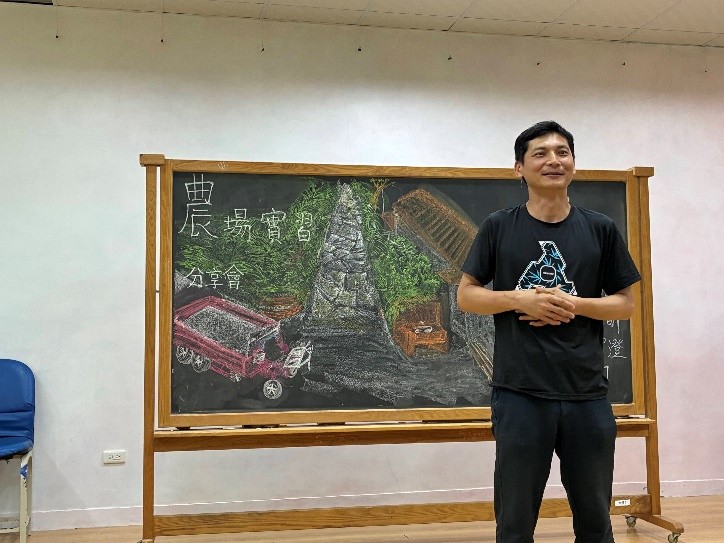
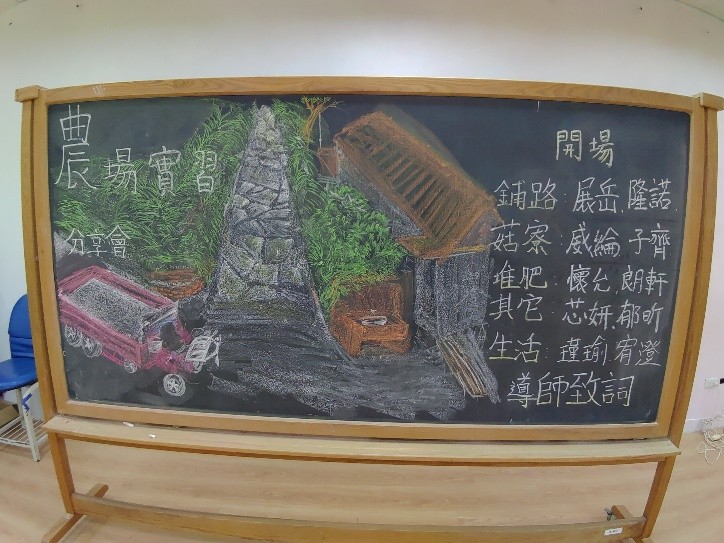
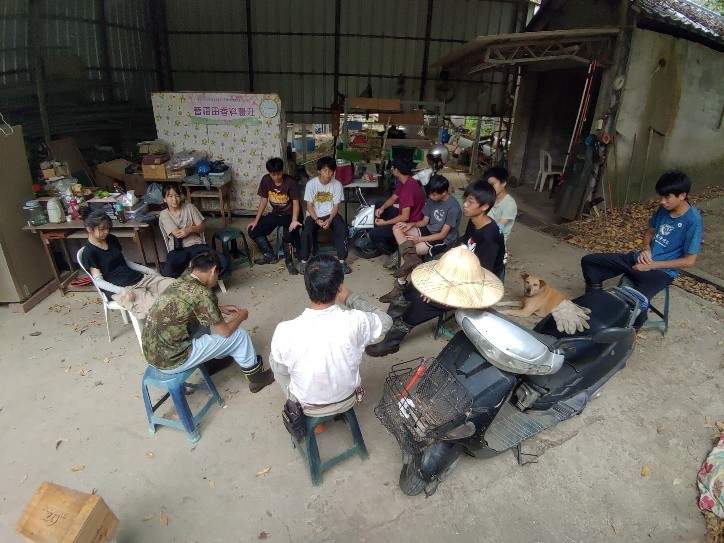
As the 18-day farm practicum came to an end, the students gathered at the final sharing session to reflect on their journey. Watching them speak with confidence on stage, recounting the sweet and sour moments with laughter, it was clear how deeply they had embraced every moment. What might have seemed like tough labor from the outside had become a deeply joyful experience.
During the trip, one student posed a poignant question: “Why did we pay money to come here and work for them?” While my exact response at the time slips my mind, the true purpose of the farm practicum was never merely about mastering Biodynamic techniques, experiencing a farmer’s routine, or enduring manual labor. Instead, it was about stepping into an unfamiliar environment and spending uninterrupted days together. Away from daily comforts, the students learned to understand one another on a deeper level—relying on, supporting, and forgiving each other as they navigated everyday challenges. Out of these shared hardships grew a genuine bond of solidarity. When trust and warmth naturally flourish among classmates, class cohesion and group dynamics take shape effortlessly. Everything else is simply a beautiful bonus.