Written by: Student Counseling Teacher, Teacher Ah-Wu
Xiao-Hua is a child with keen observation skills who is always the first to notice even the smallest changes in the classroom. She moves deliberately, yet takes care of every detail with great delicacy—a gentle, thoughtful angel in her teacher’s eyes. Recently, however, the teacher noticed frequent conflicts arising between Xiao-Hua and her classmates. Whenever the teacher asks the children to clarify what happened, arguments like this often break out:
Xiao-Hua says: “He touched me!” The classmate says: “No I didn’t! I didn’t touch her!” A classmate who witnessed the incident pipes up: “He really didn’t touch Xiao-Hua!” Furious and overwhelmed, Xiao-Hua bursts into tears, feeling deeply wronged: “He really did touch me!”
This is a common scene in primary school classrooms, but why does this happen? To understand this, we must begin with how we perceive the world around us.
Along this dimension, each of us exists somewhere on a gradient spectrum between “overly open” and “overly repressed” connections with the outside world through our senses. In Anthroposophical medicine, the two poles of this spectrum are described as the “thin-skinned” and “thick-skinned” polarities of constitution. These constitutions are innate gifts that remain with us throughout our lives, yet they also carry corresponding challenges waiting for us to transcend. Once transcended, the unique gifts inherent in these constitutions can naturally unfold.
The “thin-skinned constitution,” also known as the “hysterical constitution,” describes individuals whose senses are wide open, with their perceptual boundaries even extending beyond their physical body boundaries. (Therefore, even if the classmate didn’t actually touch Xiao-Hua’s body, Xiao-Hua already felt invaded.)
Imagine this kind of “over-perception”: when you walk into an unfamiliar room, you simultaneously receive more than ten pieces of information—a window is left open, a picture frame is crooked, the desk arrangement has changed, a new drawing is on the chalkboard, a group of classmates in that corner is laughing loudly, a new water bottle has been placed on the teacher’s desk… When so much information strikes all at once, it frequently causes “overload,” requiring the individual to protect themselves through seemingly “withdrawn” or “procrastinating” behaviors.
The way a child with this constitution approaches the world can be likened to the image of “stepping into cold water in a swimsuit during the biting cold of winter.” The water is too freezing and too stimulating, so they can only take one tiny step at a time. Every single activity around them is full of stimulus. When such perceptual capacity requires them to exercise willpower to accomplish tasks, the “collisions” brought about by encounters coming from all directions can even trigger a kind of “soul pain,” causing them to feel anxious and powerless, or forcing them to barely maintain inner stability through “withdrawal” (non-participation, passivity, watching from afar) or “aggression” (high emotional tension or physical aggression).
In modern psychological terminology, we also use words like “highly sensitive” to describe such individuals. They may be particularly sensitive to various sensory perceptions, such as hearing, vision, smell, and touch—for example, tags must be cut off their clothes, or they will inexplicably sleep poorly if they wear non-natural fabrics to bed. Because their perceptions are wide open, they are also easily influenced by the energy in their environment, becoming easily drained and exhausted in crowded, noisy settings, or translating the emotional tension experienced in the classroom into somatic symptoms upon returning home (such as stomachaches, frequent urination, etc.).
Observing contemporary children, we find that children with “thin-skinned” or “highly sensitive” constitutions are increasing in number. One might even say that humanity’s overall evolution is rushing headlong toward a “thin-skinned constitution.”
Yet, as with the two sides of everything, this constitution also brings remarkable gifts. Their extraordinary perceptual capacity endows them with delicate observation skills, a high degree of empathy, artistic appreciation, and deep sensitivity to the subtleties of interpersonal relationships. They are natural connectors, communicators, artists, performers, and healers. They can perceive and anticipate the states and needs of an individual or a group beyond mere words and respond accordingly.
However, how can one transcend these challenges and embrace the innate gifts of the “thin-skinned constitution”?
During childhood, the most crucial underlying foundation still requires returning to a “regular rhythm of daily life.” This allows the child to grow an inner framework they can rely on through daily rhythms, bringing a sense of stability. Children with a thin-skinned constitution need a “powerful center” to hold and digest their open senses and sensory information. Therefore, “rhythm” is the foundation of everything.
Additionally, providing children with “gentle yet clear boundaries” so they feel their emotions are held and understood helps them return to themselves. For example: “I know you are very angry, but we cannot kick people.”
Furthermore, because we understand this constitution as their unique gift, when adults around the child can “completely accept” the child’s innate constitutional nature rather than questioning them with “you’re just being too sensitive,” and instead learn alongside the child how to live with their own gift, we can help the child better accept themselves and feel more at ease.
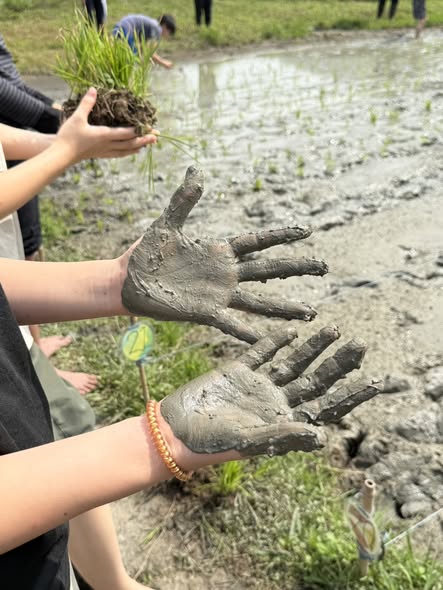
In daily life, we can consciously reduce sensory stimuli to prevent overload—for example, by simplifying holiday schedules, maintaining spatial tidiness, and reducing the use of 3C devices. We can use physical activities involving greater connection with nature to digest sensory information and calm the inner self, such as running freely on the grass, taking nature walks, and playing with sand, water, and mud.
The thin-skinned constitution, like all other constitutions, is a gift from above. For adults accompanying such thin-skinned children, watching them grow, develop inner strength, and manifest their extraordinary perceptual gifts is a truly beautiful thing.
Are you a thin-skinned person? Welcome to share your life story with us.